

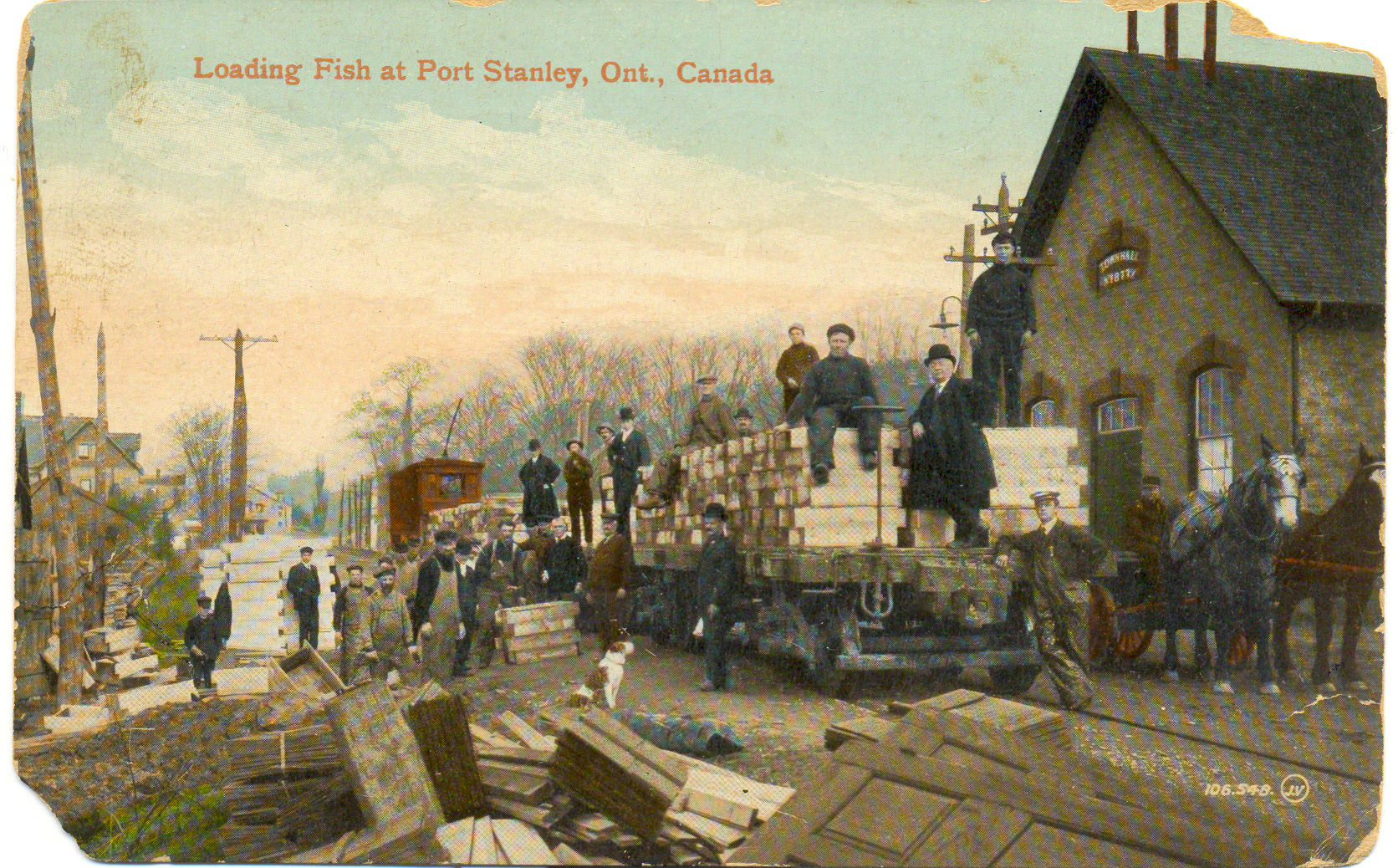
In 1911, Port Stanley's commercial fishing industry peaked, with herring being shipped to major cities, while the town hall, built in 1877, stood in the background.
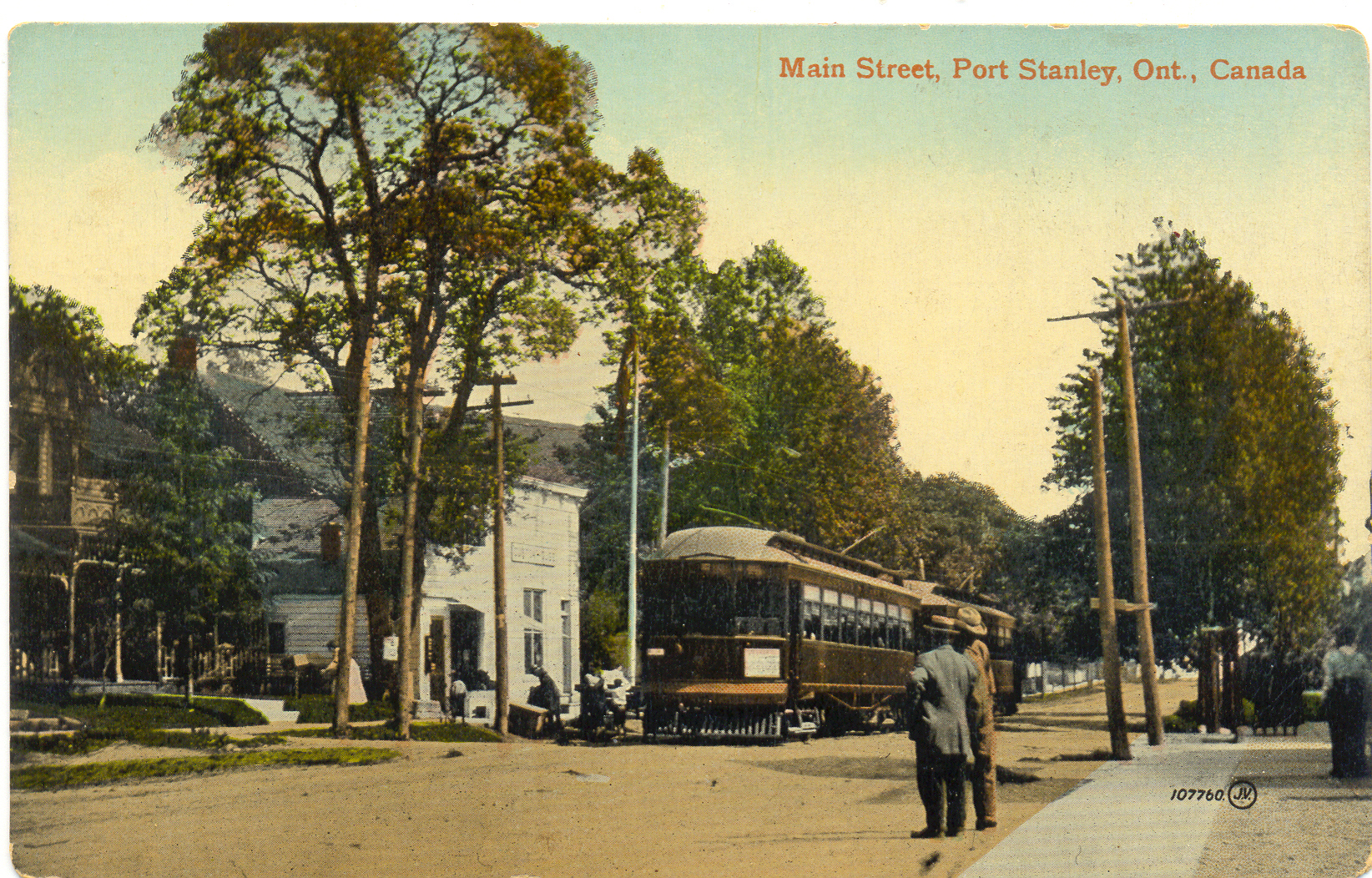
This 1911 photo of Main Street, once owned by Jack Brumpton, shows Manuel Payne, a key figure in Port Stanley, with the streetcar from the Southwest Traction Company and the Port Stanley custom house in the background.
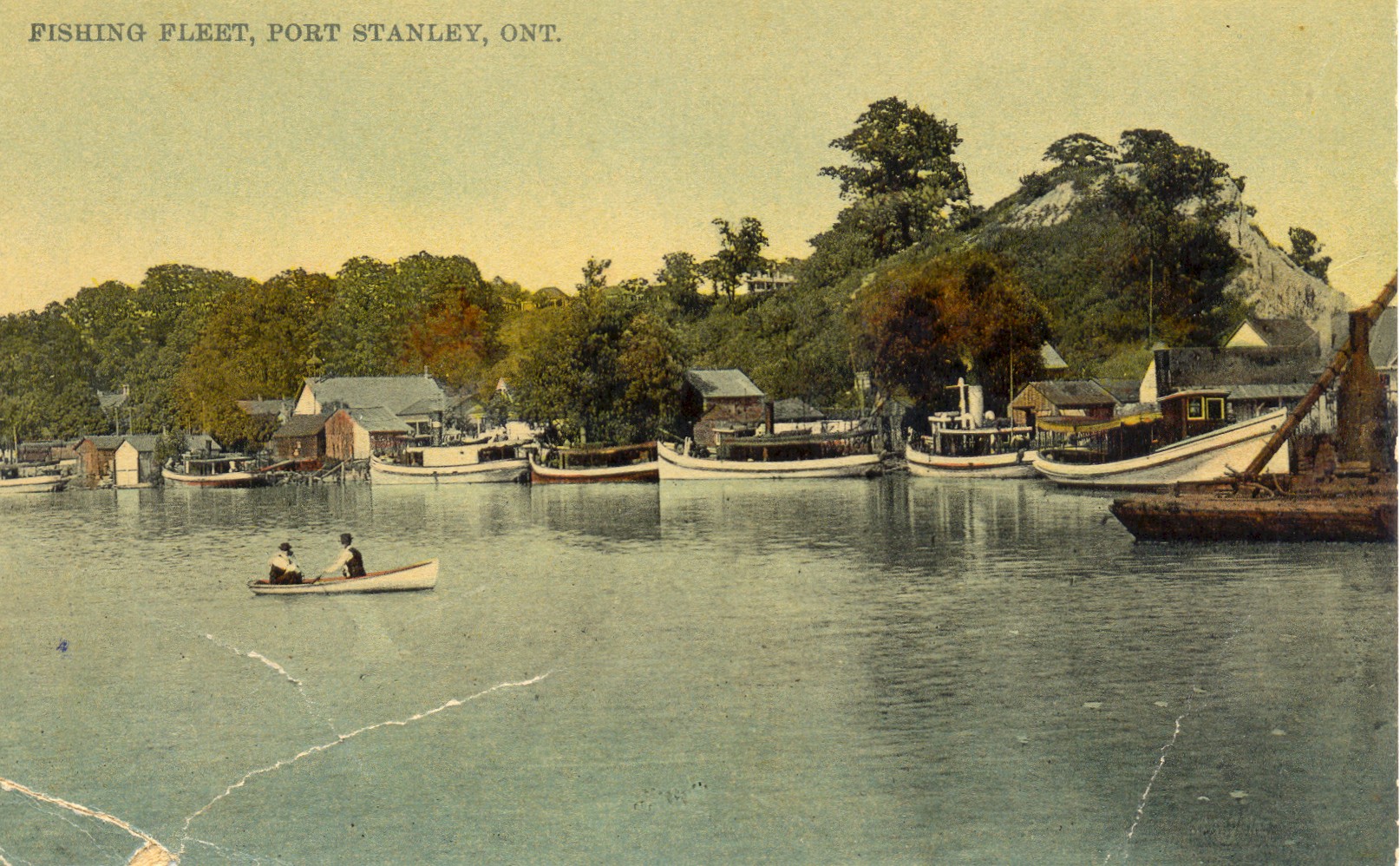
In 1911, steam-driven fish tugs lined the harbour, while gill nets boosted the fishing industry; the building atop Hillcrest later became the Hillcrest Inn.
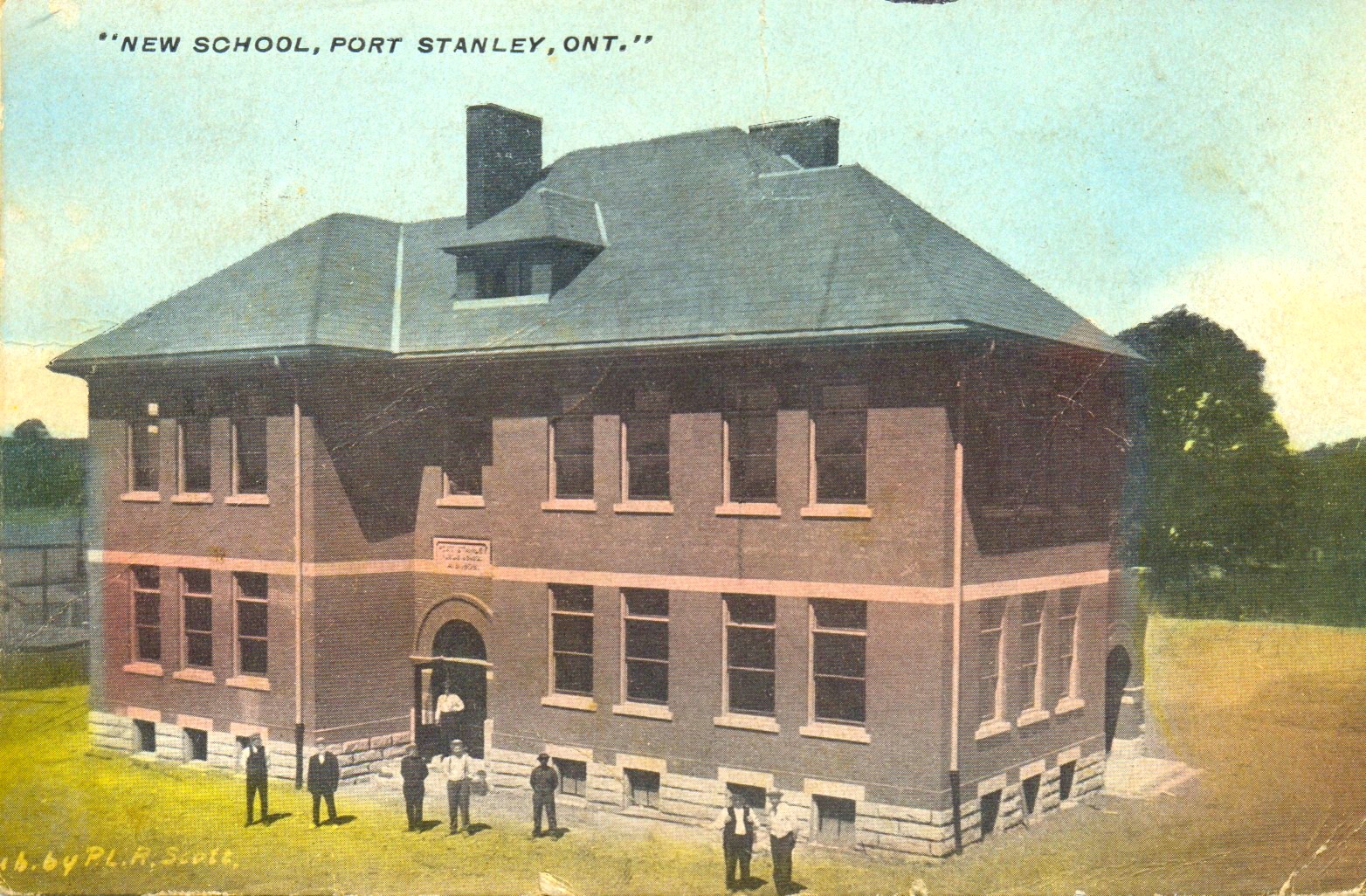
Built in 1908, Port Stanley's third school featured classrooms and a library, with the boys’ entrance shown here; its stone plaque was preserved after the building’s demolition in 1972.
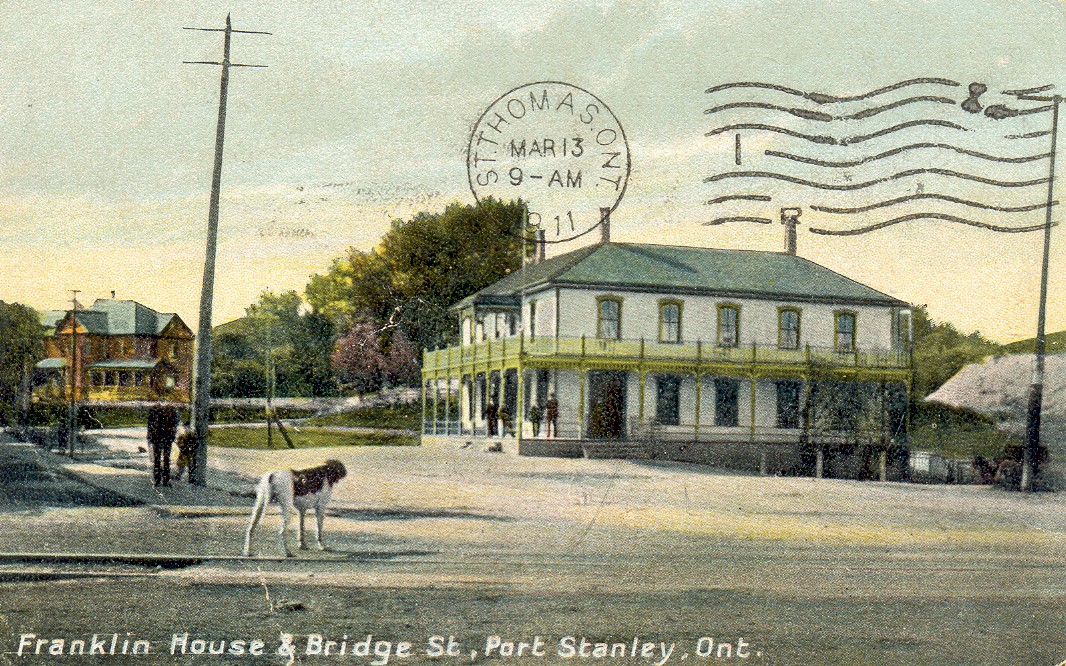
In 1911, local photographer F. Loftus captured the Franklin House, a Port Stanley hotel until 1918, while a large dog, often seen around town, appeared in the foreground.
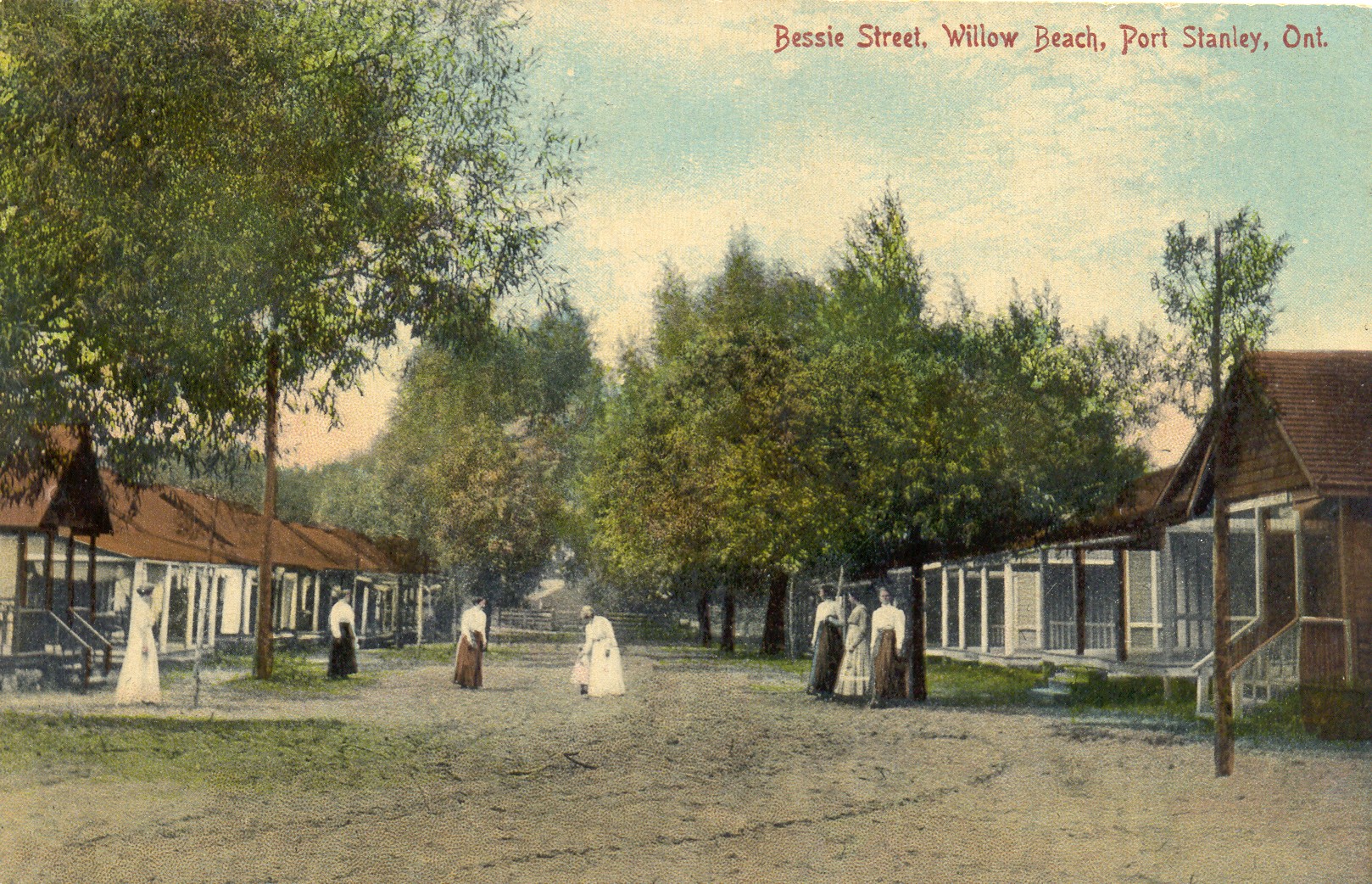
This 1912 photograph shows a pre-WWI scene of Bessie Street, formerly part of Willow Beach, named after Manuel Payne’s daughter, with cottages and long dresses typical of the era.
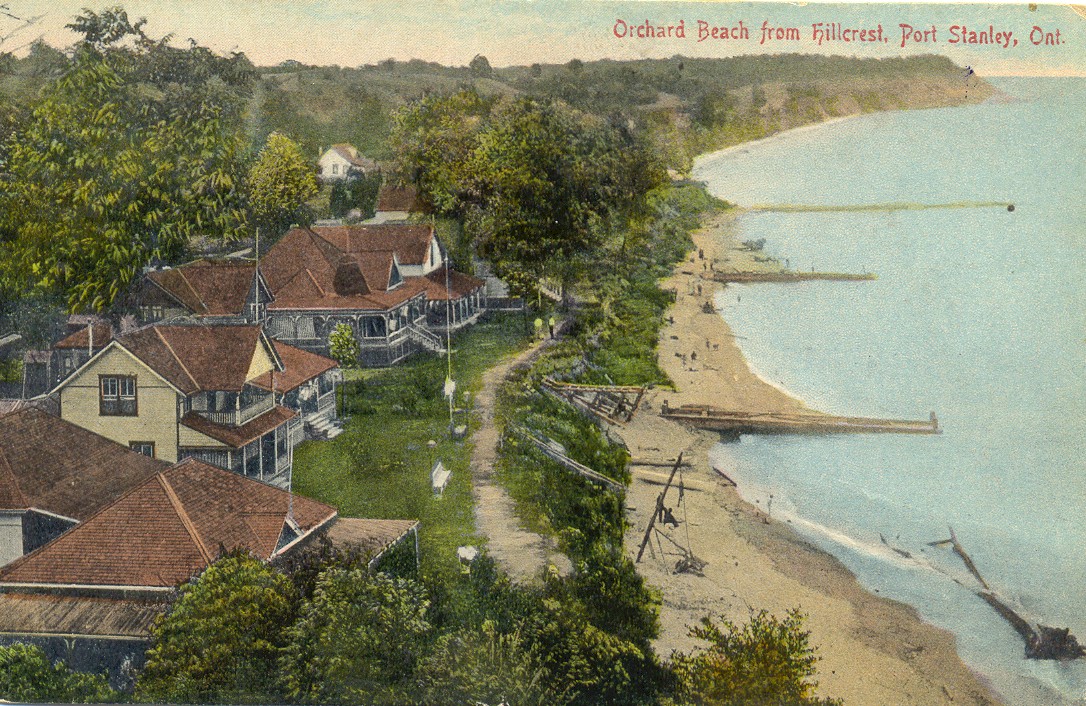
Taken on February 17, 1912, this photo captures the summer cottage area east of Port Stanley's business section, known as Orchard Beach once an orchard and features the early breakwaters built to combat erosion, which later claimed much of the land.
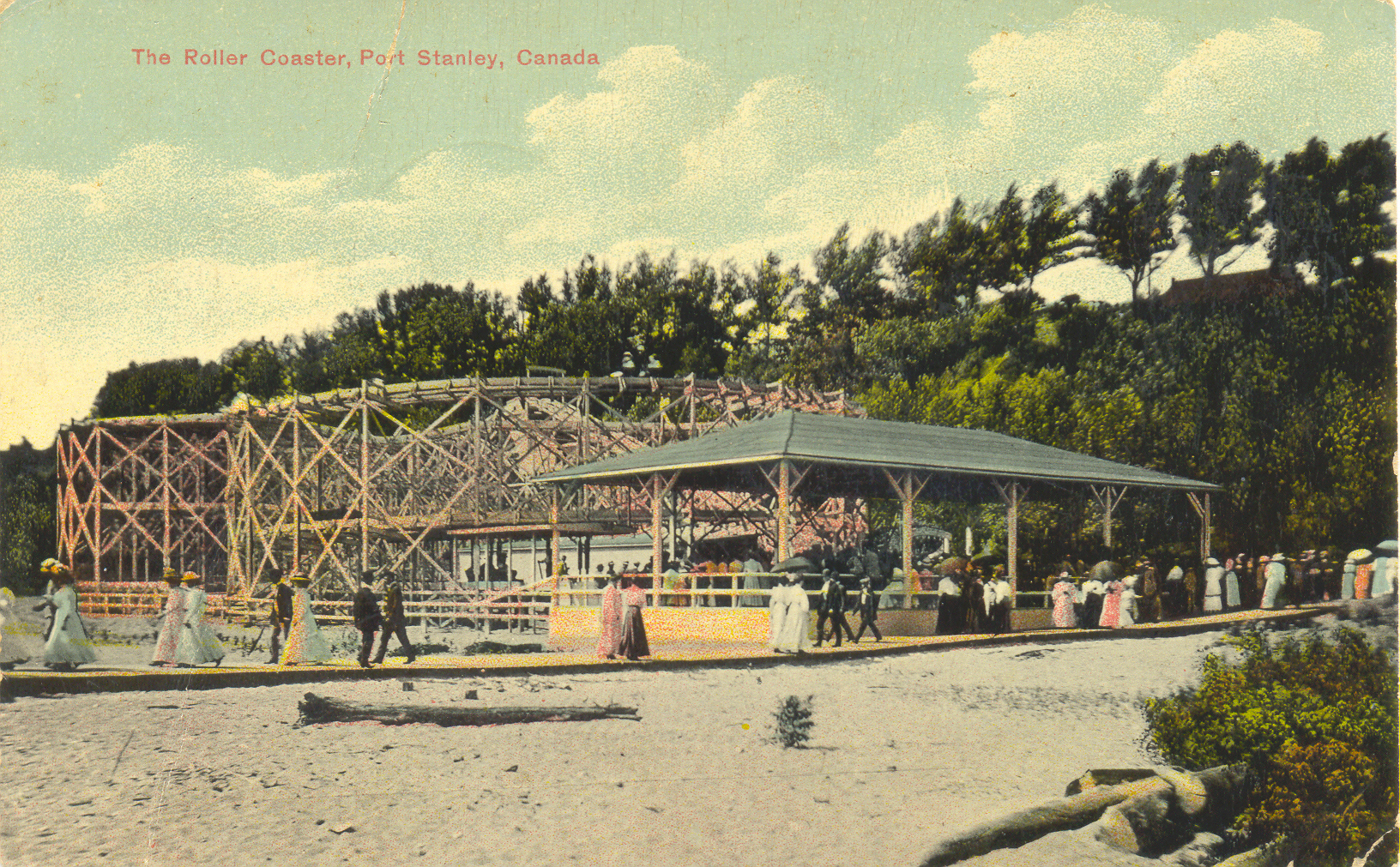
Postmarked in 1911, this photo showcases the large wooden roller coaster that once stood west of the incline railway, near what is now Edith Cavell Boulevard, where rides cost just 5 cents according to Jack Brumpton, the original owner of the card.
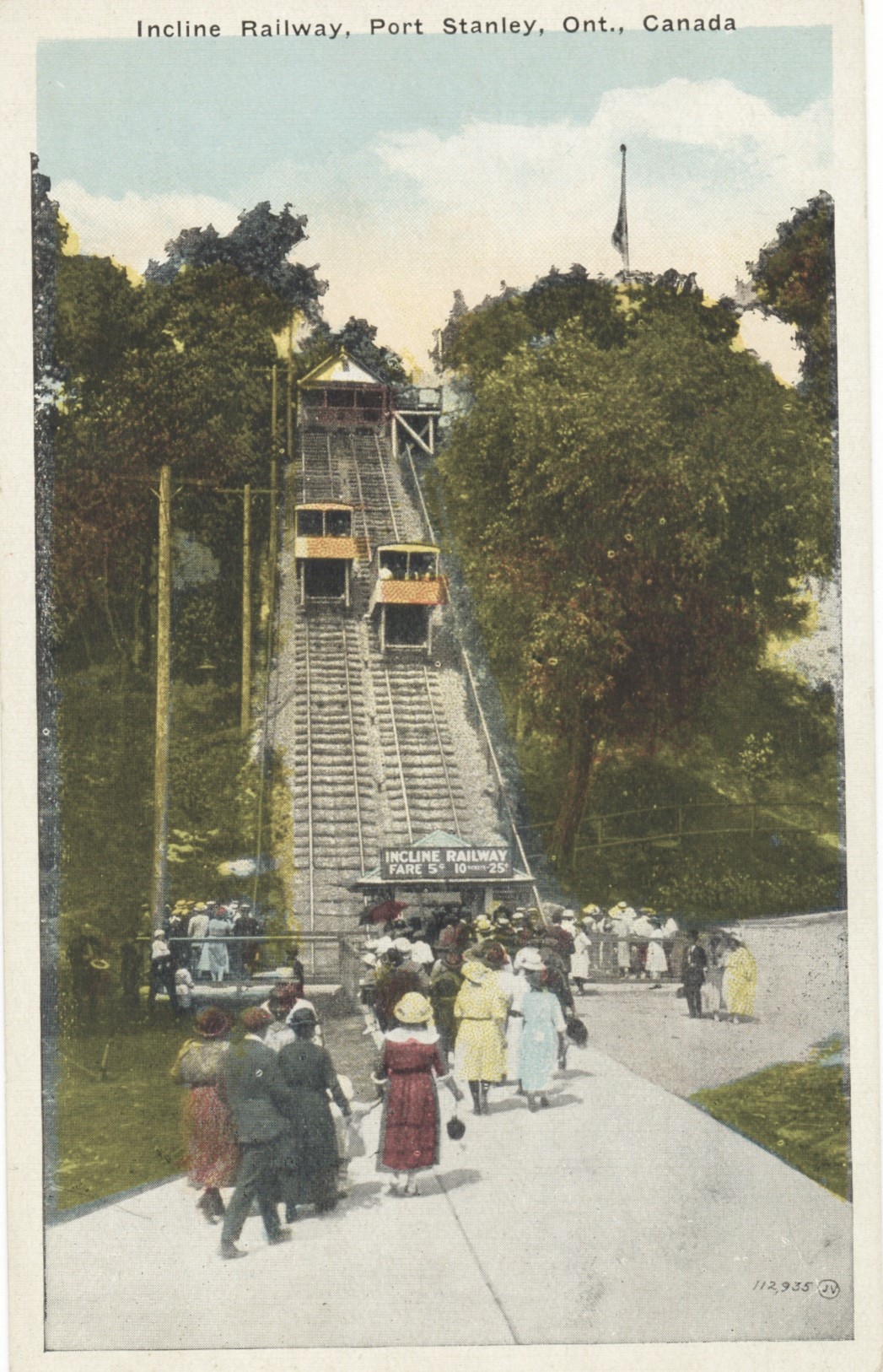
The Incline Railway once ferried beachgoers and picnickers between the bluff and shore, an iconic ride remembered in old cottage drawers and summer tales.
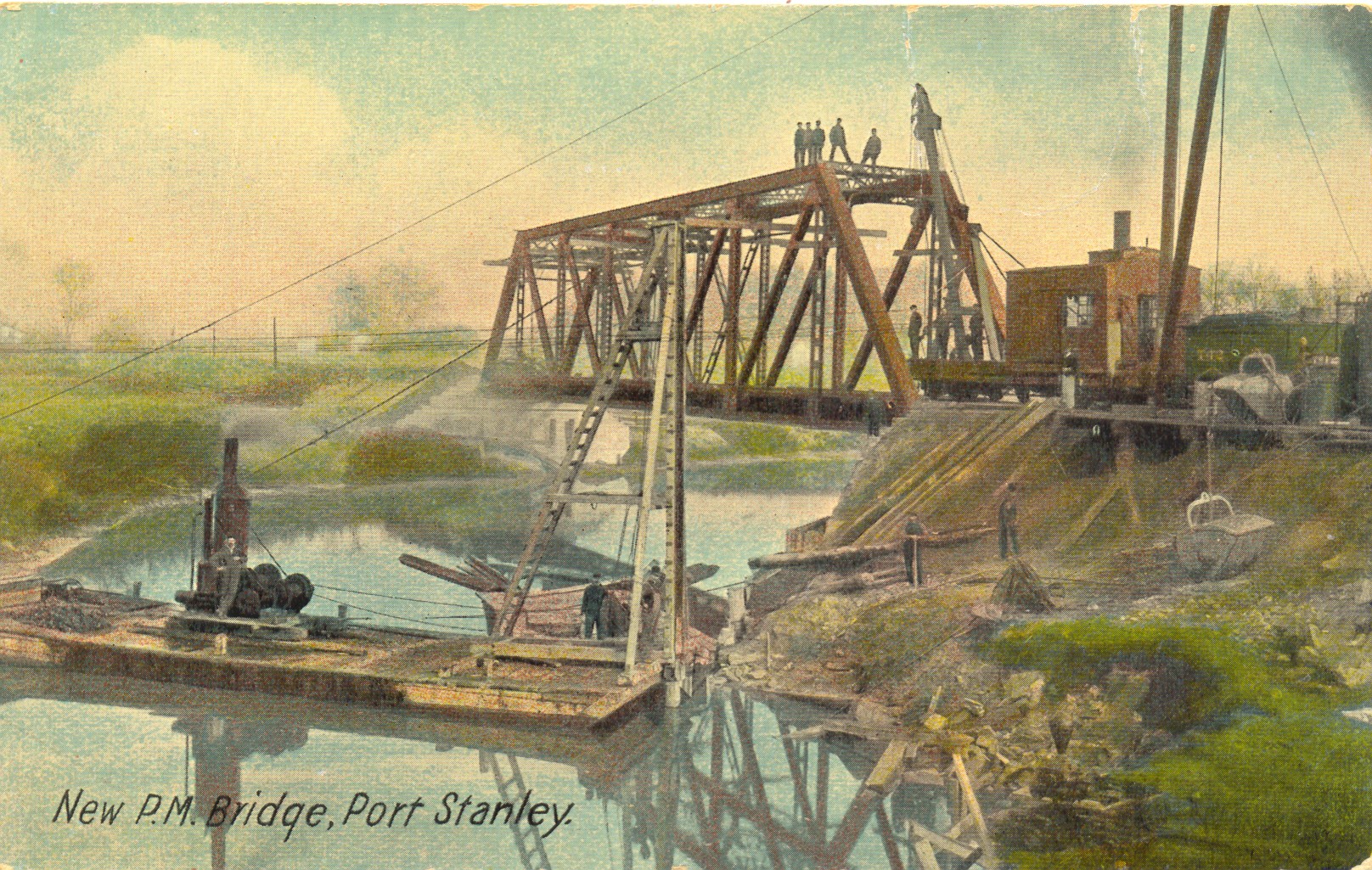
Before 1913, this sturdy steel railway bridge carried trains across Kettle Creek, replacing its wooden predecessor and echoing the age of steam and steel.
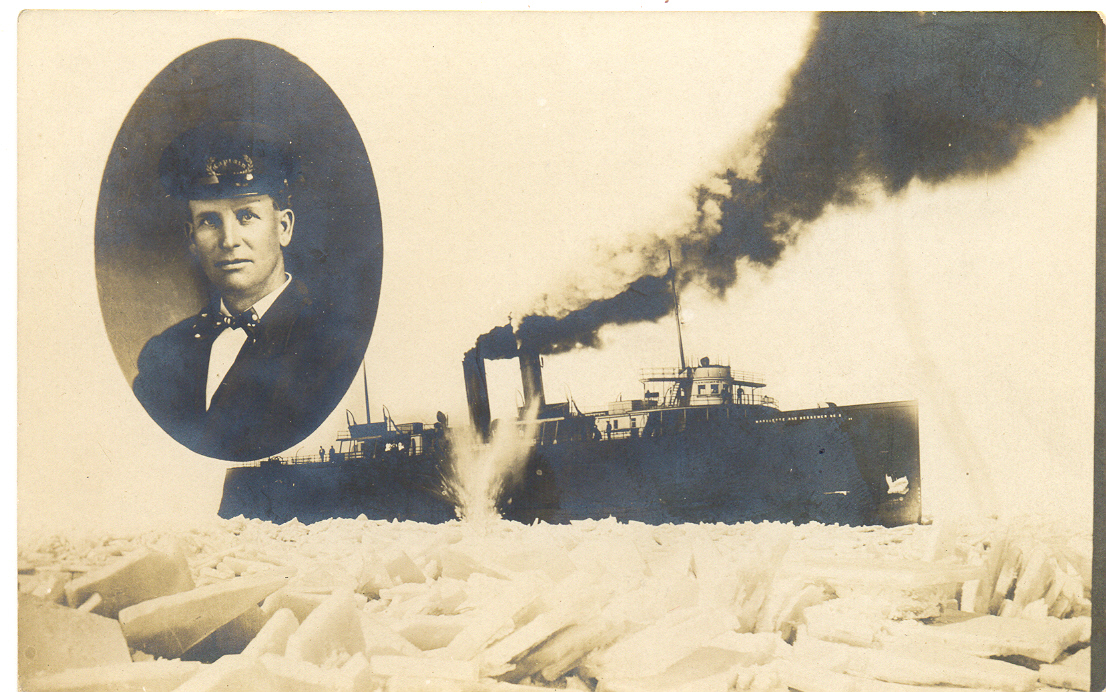
The Marquette and Bessemer No. 2 sank in a fierce December storm in 1909, one of three ferries by that name, and a final voyage that claimed Captain Robert McLeod.
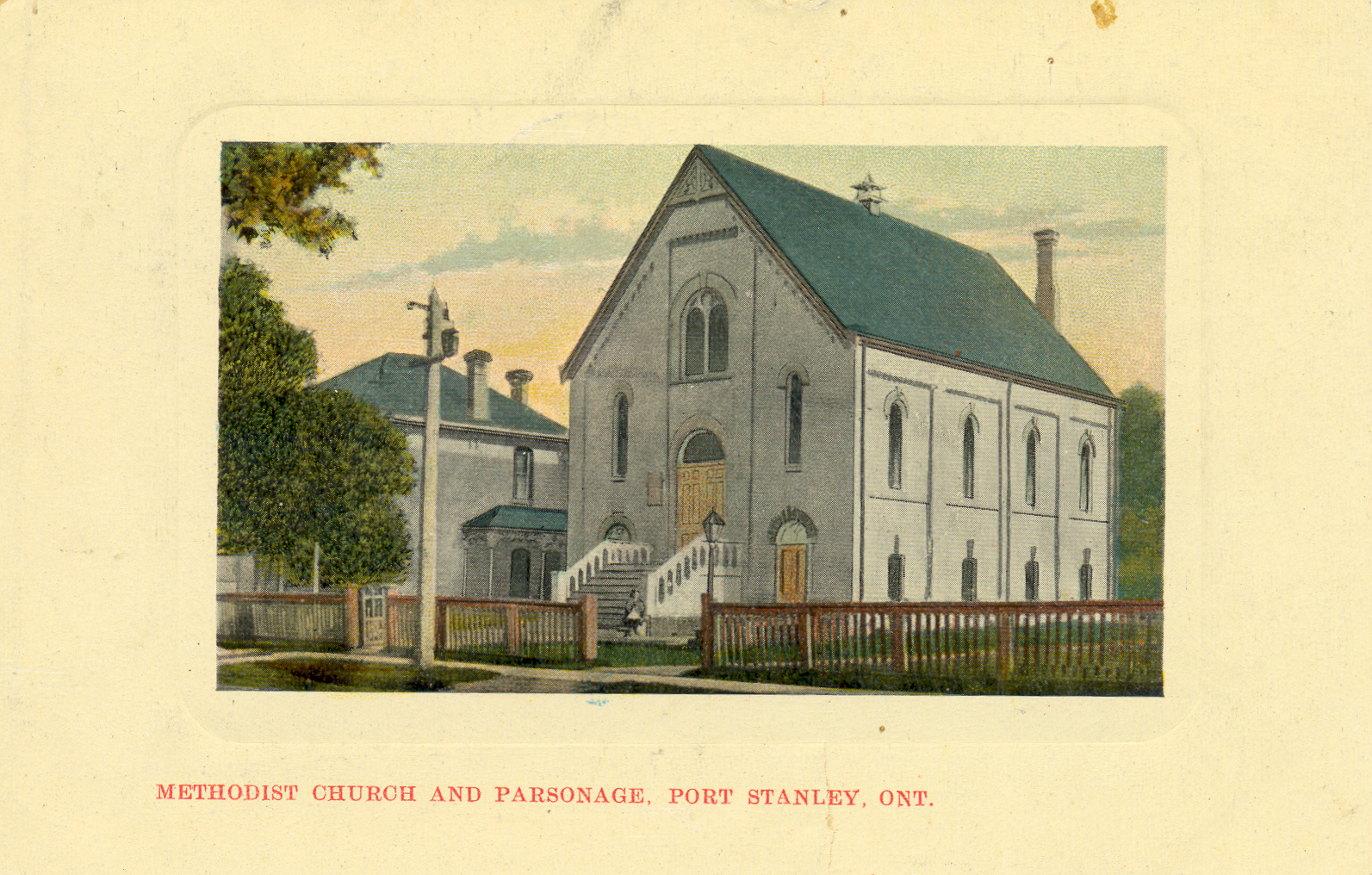
Built in 1888, this early church stood through union and renovation, its parsonage now gone, but its spirit still rooted in the village's past.
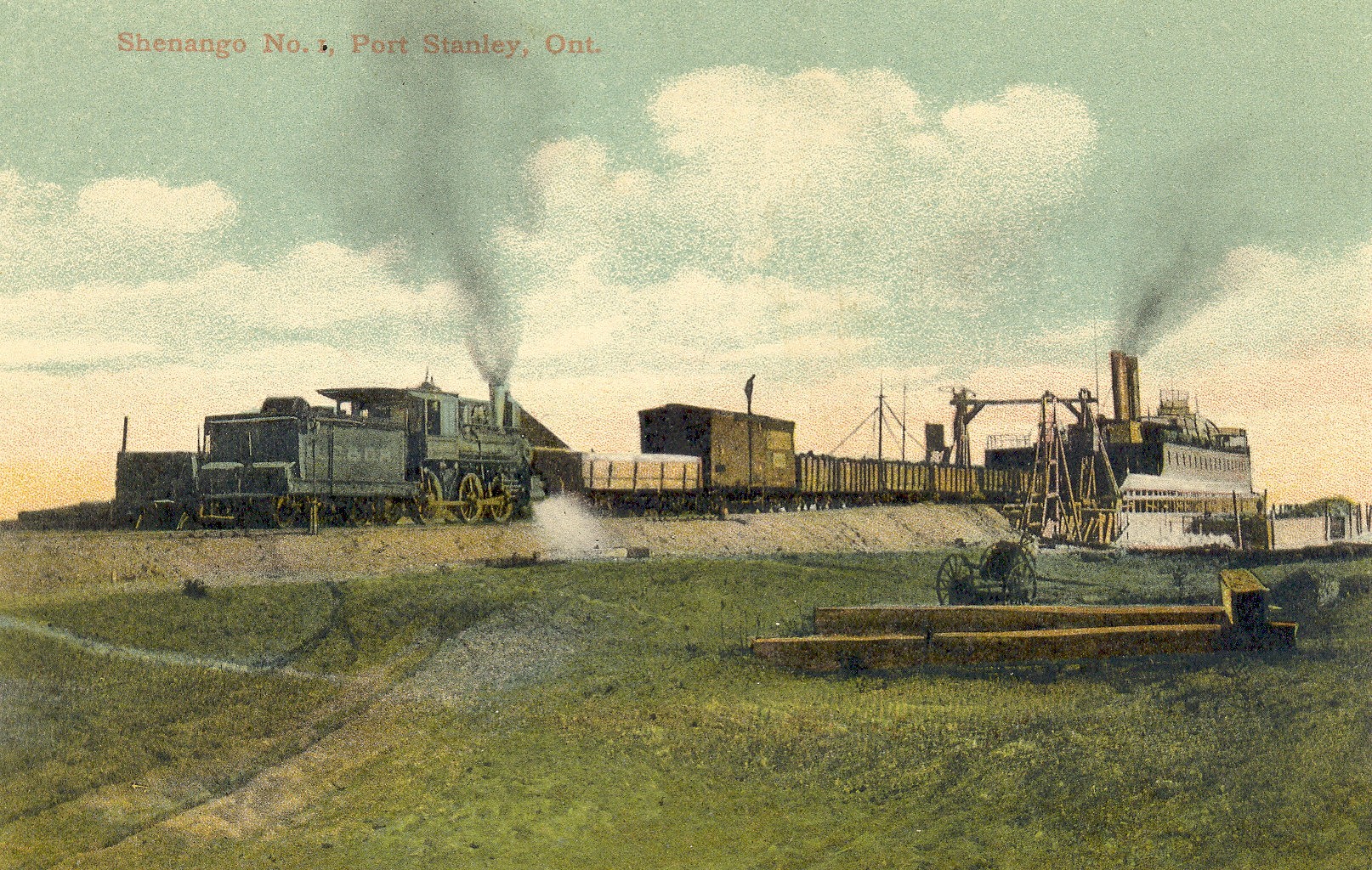
Rarely linked to Port Stanley, the Shenango #1 carried coal across Lake Erie, until fire and ice sealed her fate in 1904.
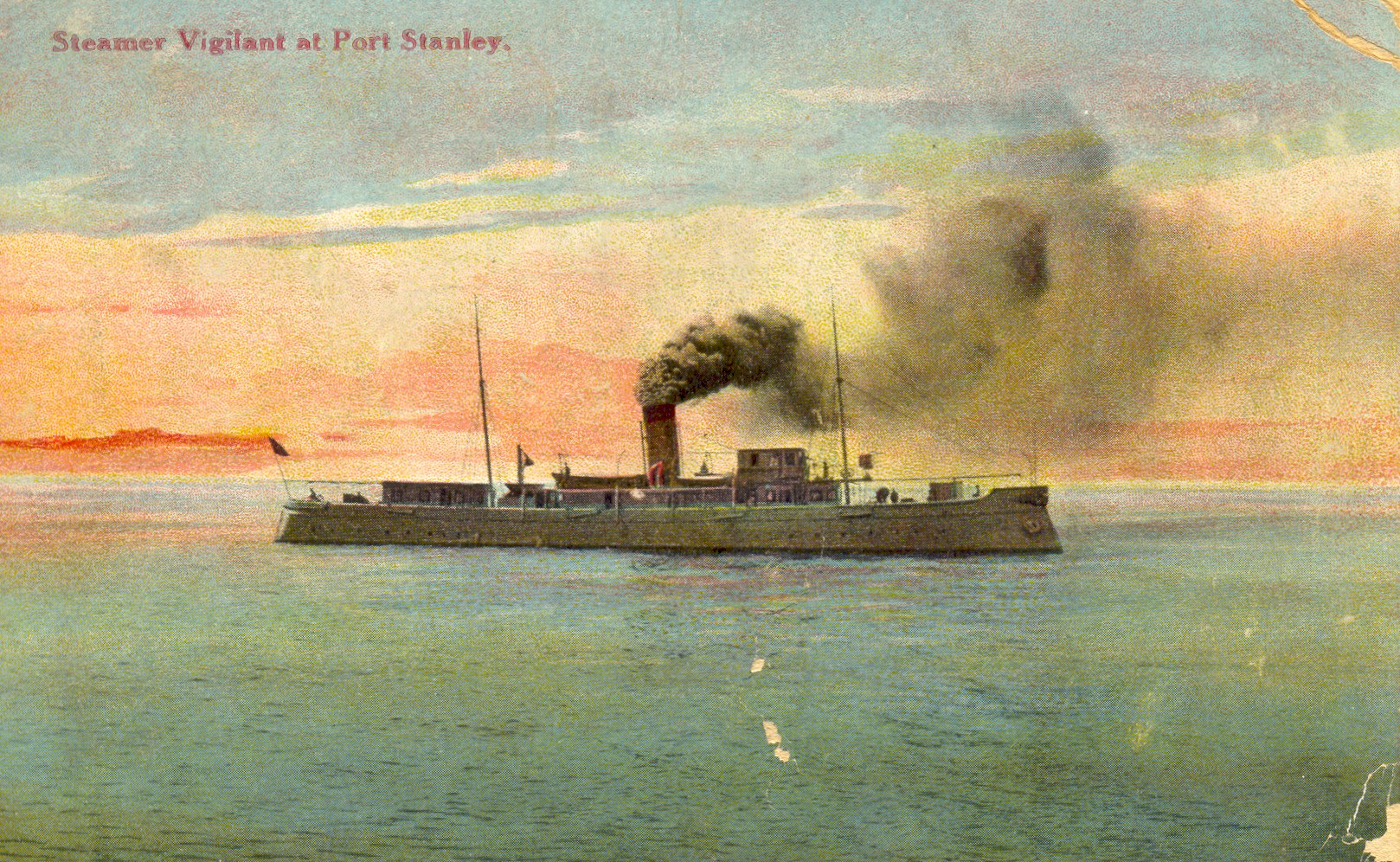
The Vigilant, a swift and armed patrol boat, once cruised these waters, its guns and presence a clear message to poachers from the south shore.
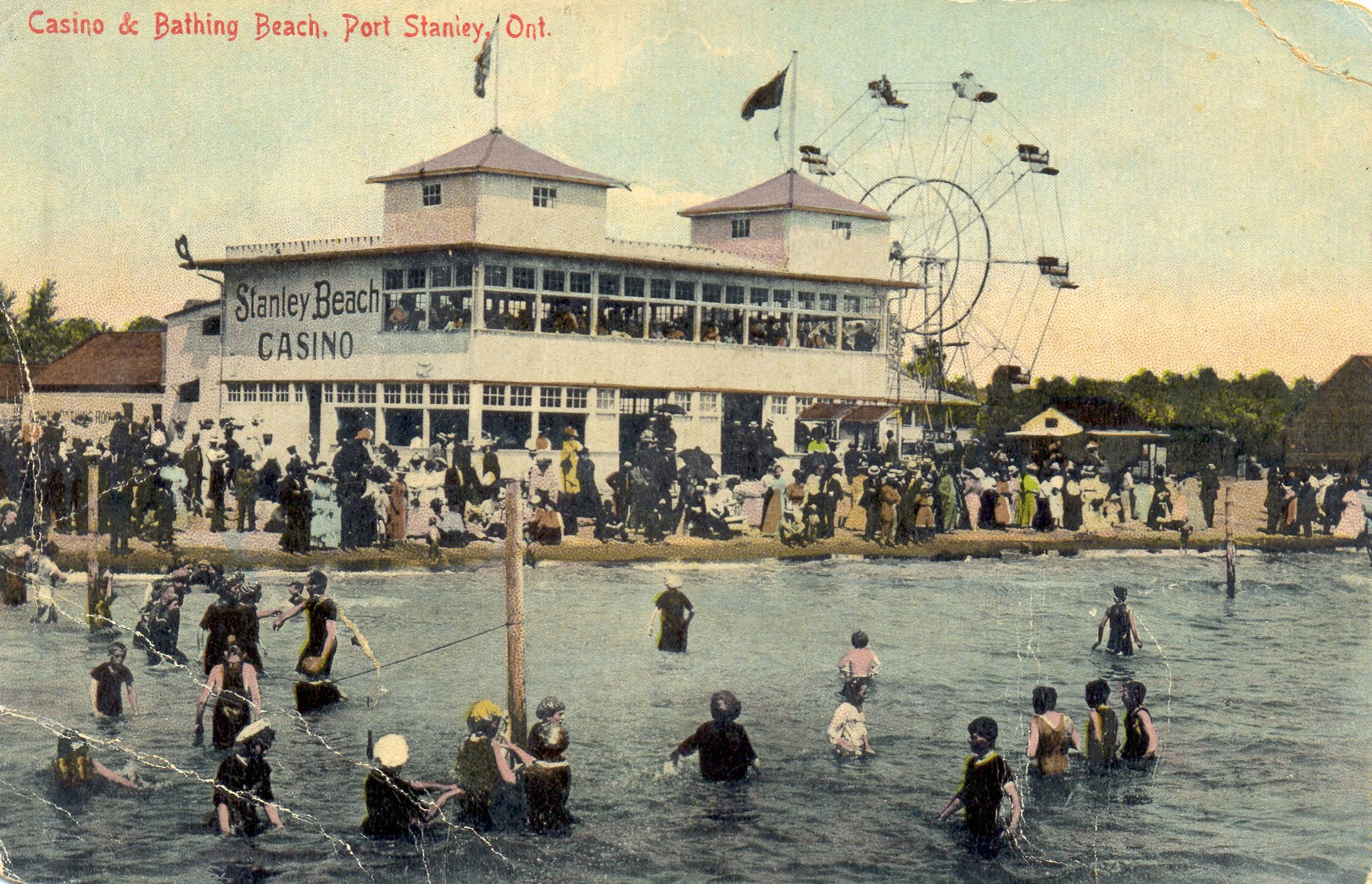
Once home to Canada’s largest indoor dance floor, this grand hall echoed with five-cent jitney dances and the music of Guy Lombardo, long before 'casino' meant slot machines.
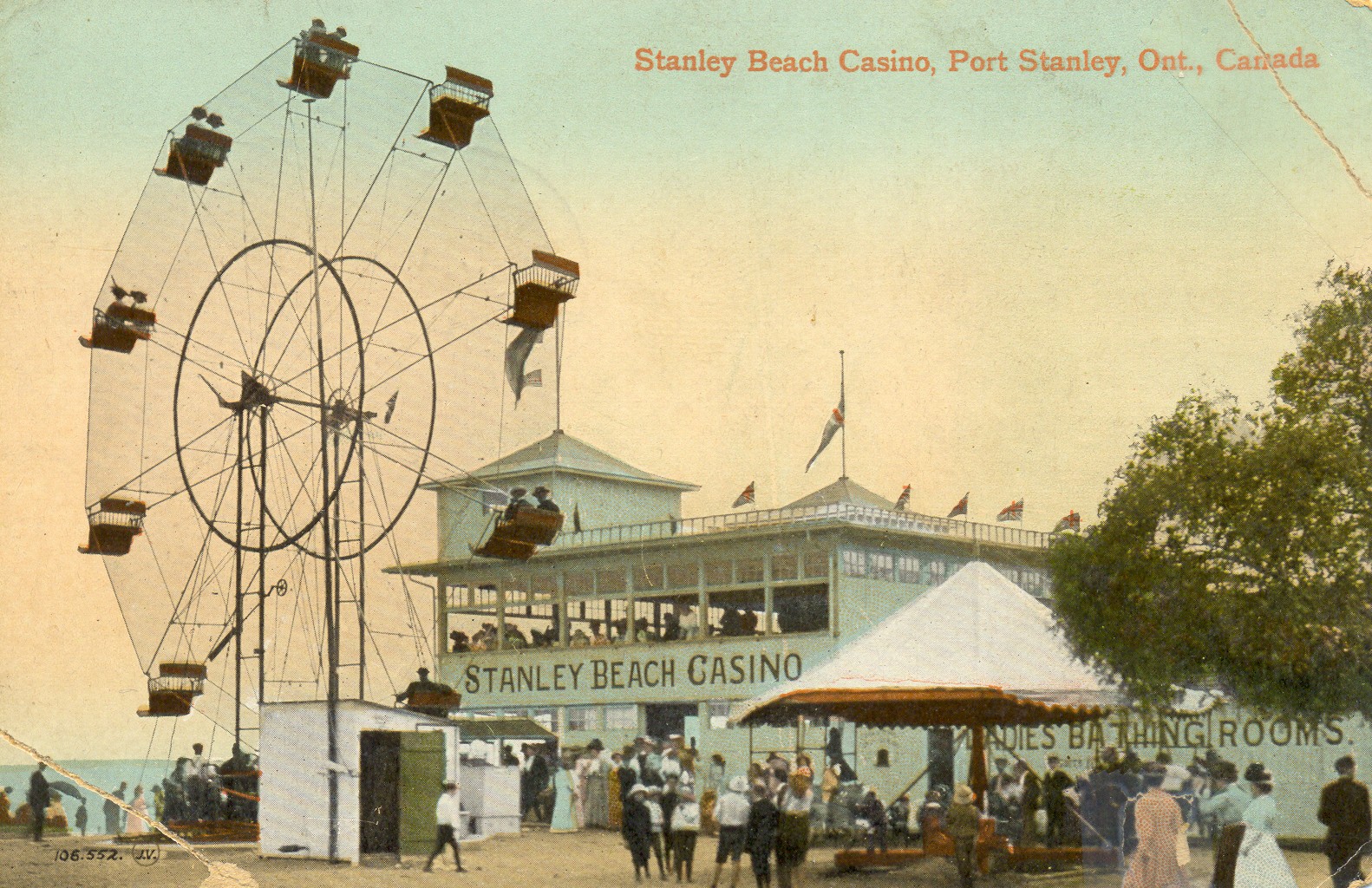
Lost to fire in 1932, the Port Stanley Dance Casino and its merry-go-round live on in memories, like a boy sifting ashes for glass horse eyes.
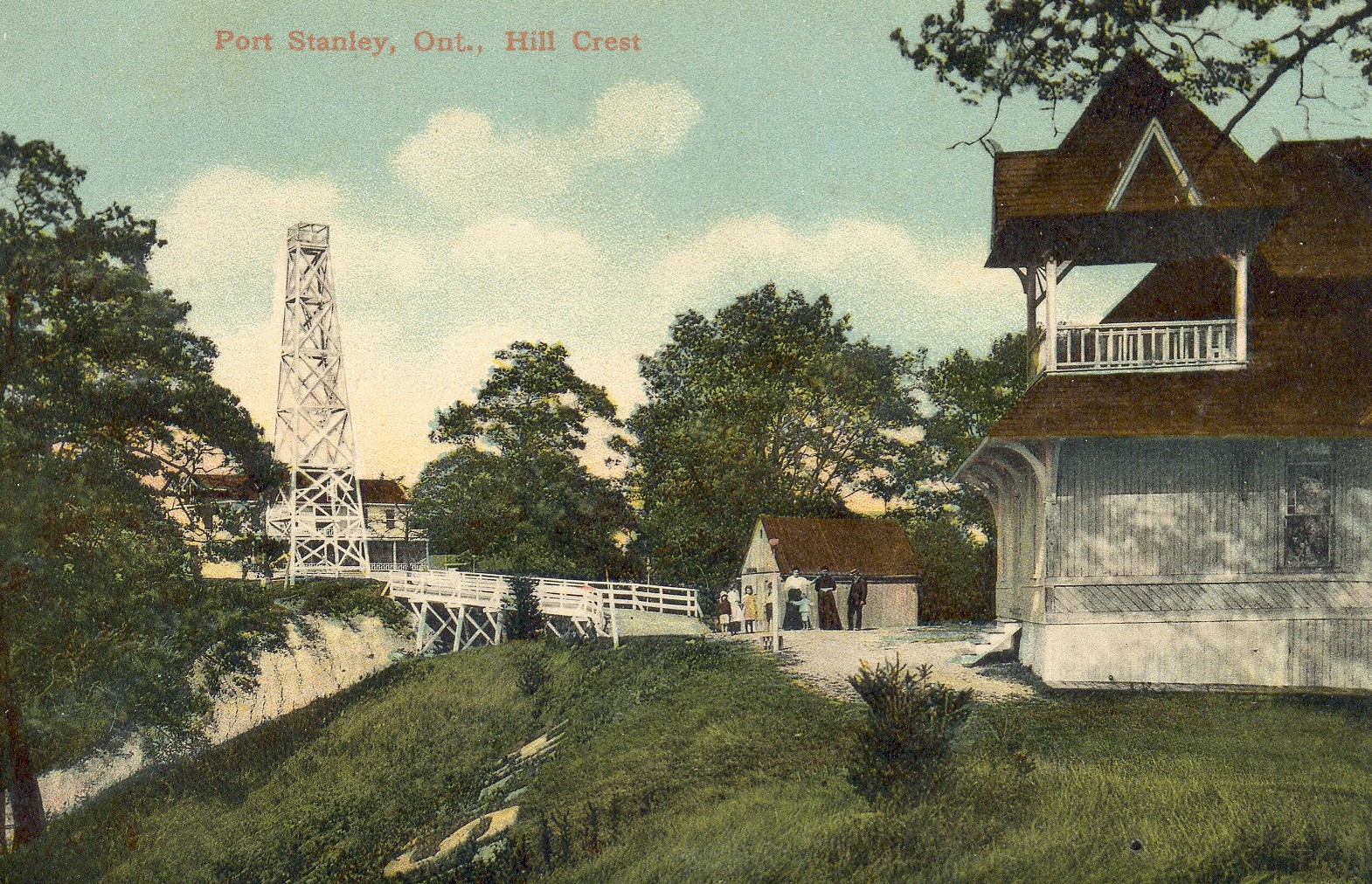
Perched on the Hillcrest bluff, the Liberty Hill Club offered cottage life with elegant dining, overseen by a first-class steward in the summer of 1909.
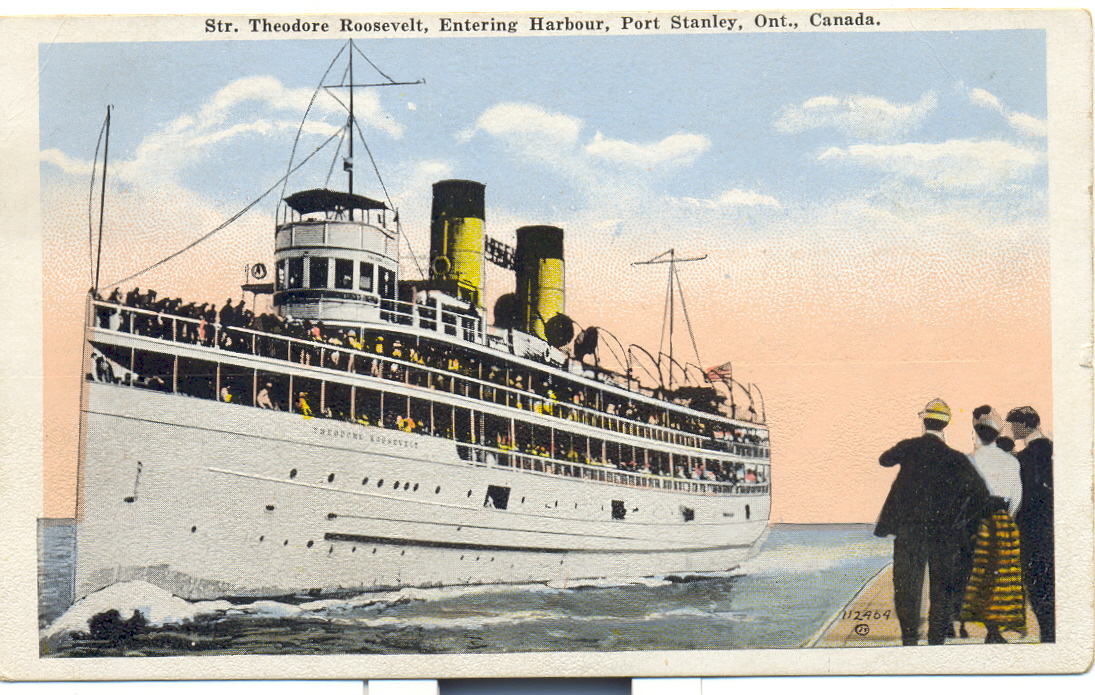
Once the fastest ship on the Great Lakes, the steamer Theodore Roosevelt steamed into Port Stanley before serving in war and returning to carry passengers across Lake Erie.
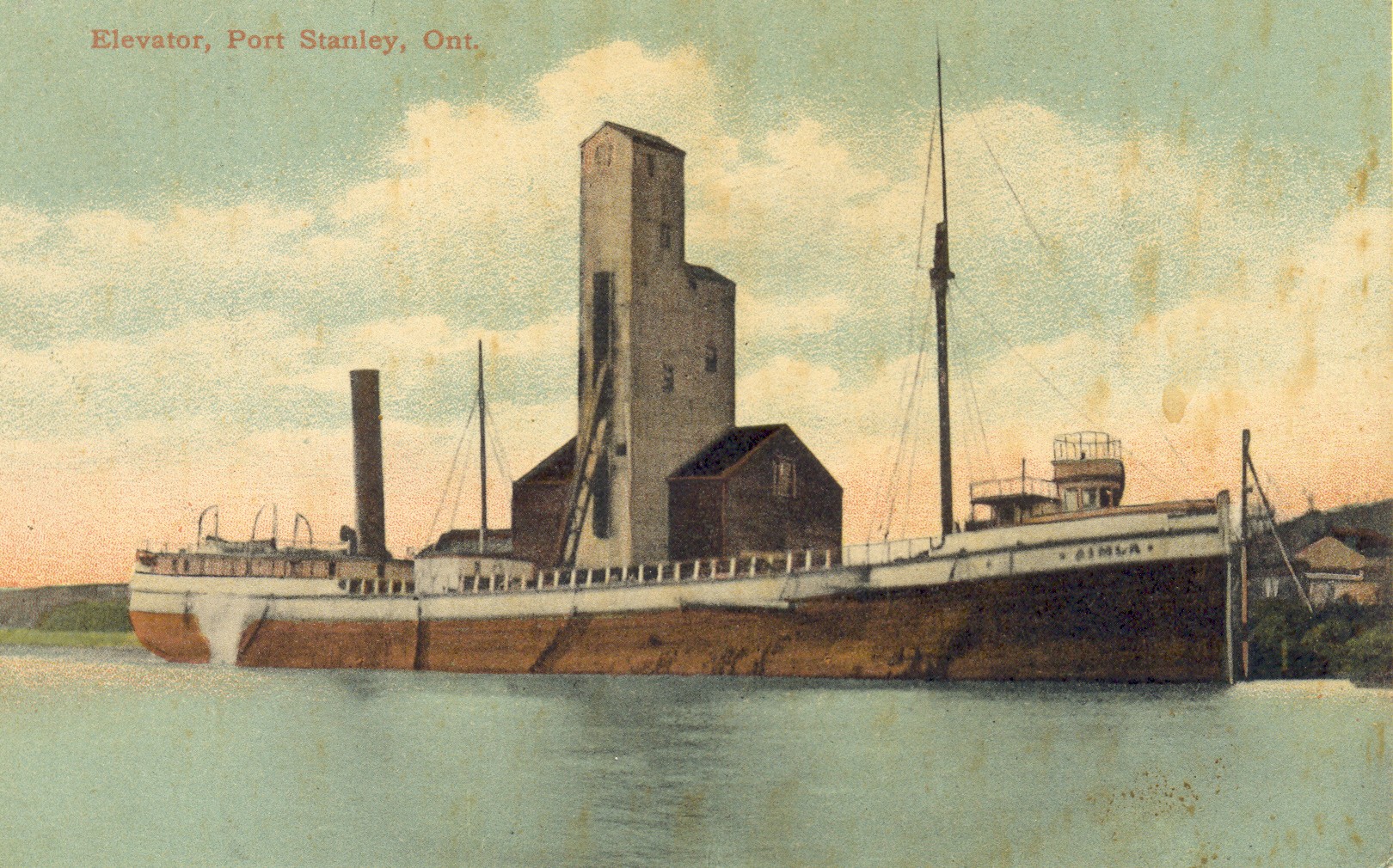
The 1908 grain elevator stood tall beside the harbour, watched over by the coal-carrying steamship Simla navigating Lake Erie’s busy waters.
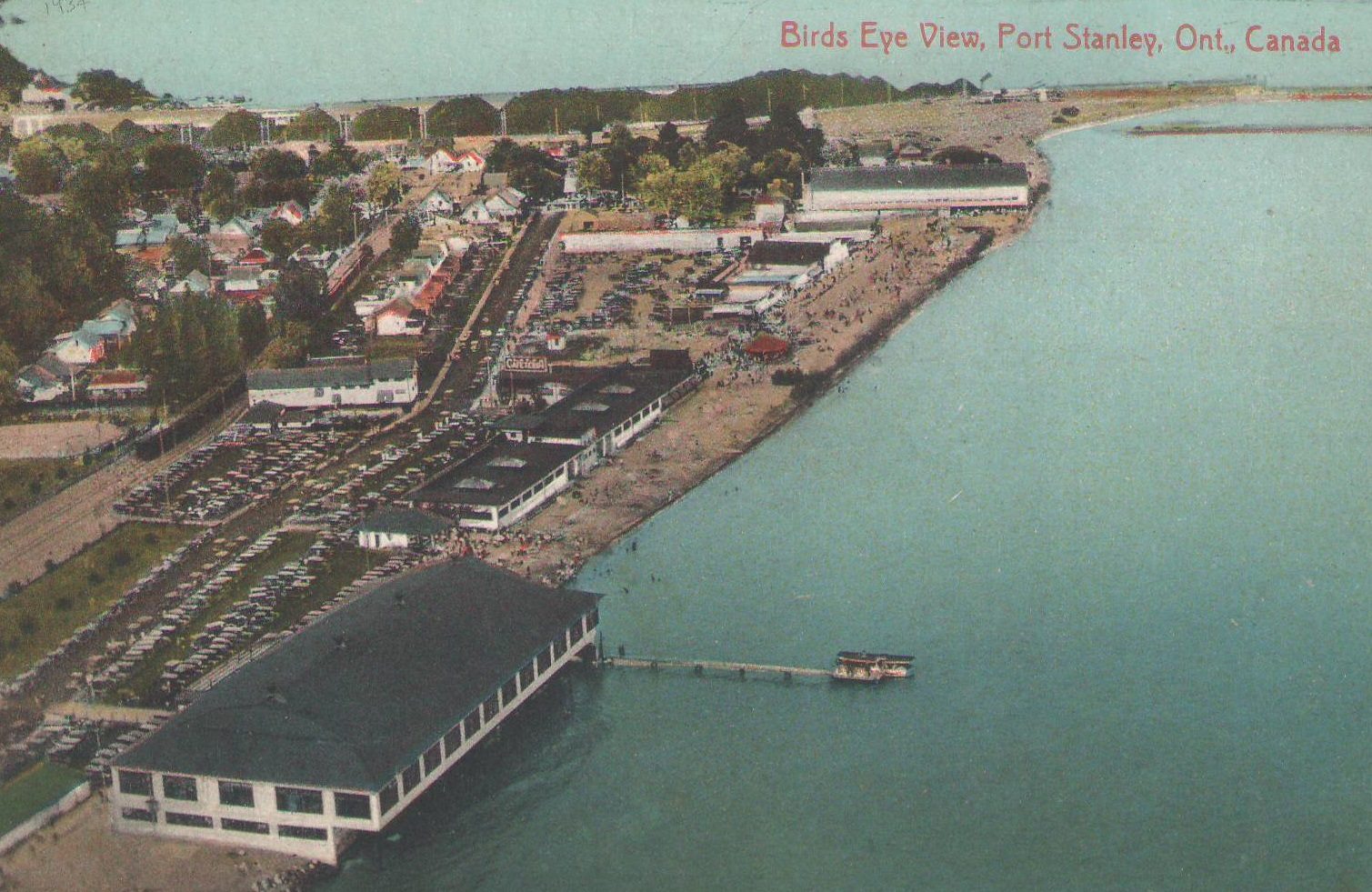
Orchard Beach once stretched far beyond today’s shoreline, where summer cottages, like the Darch family’s, stood before erosion slowly claimed the land.
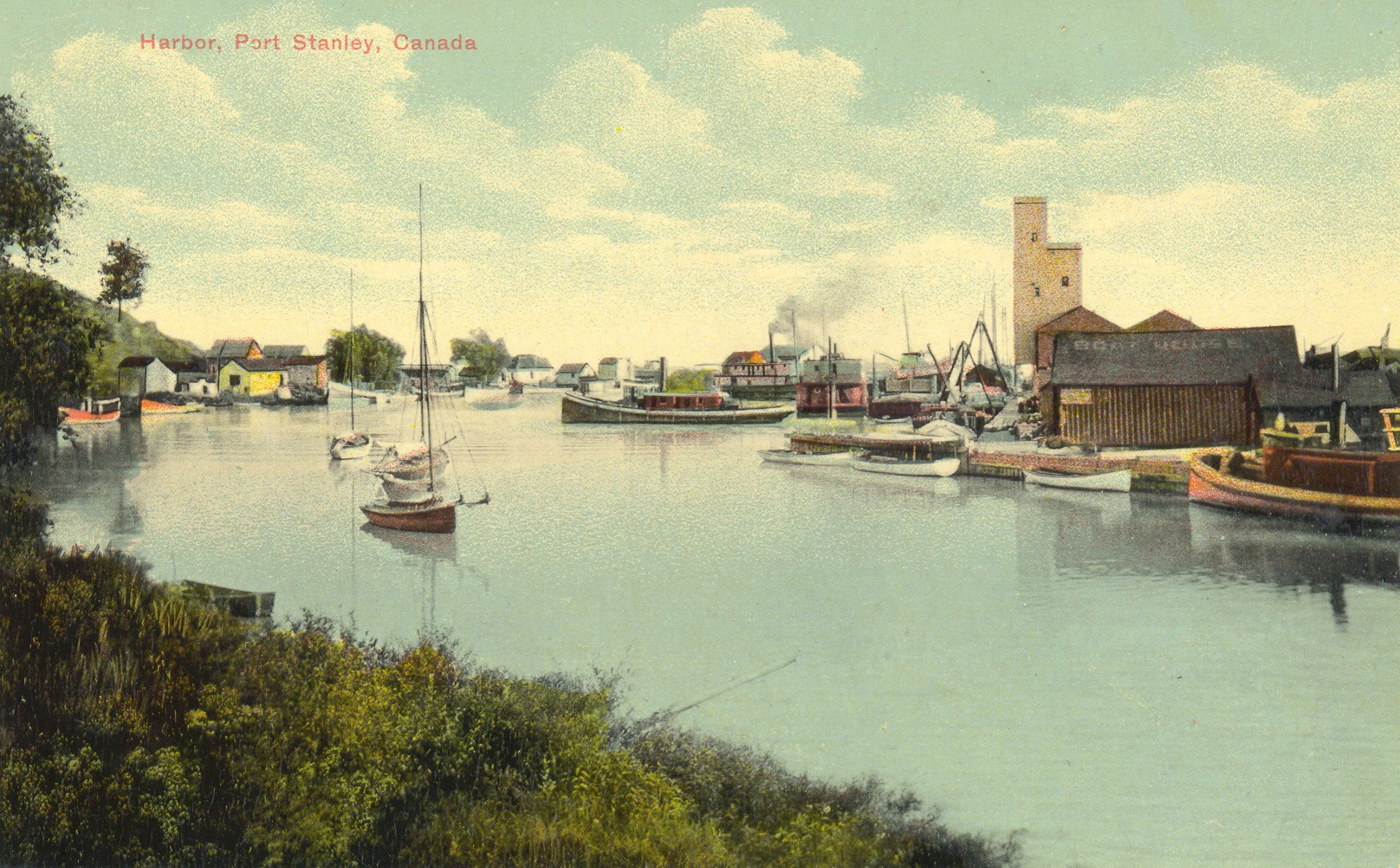
Port Stanley Harbor once featured a wooden grain elevator by Kettle Creek, serving local millers before fire gave way to concrete replacements.
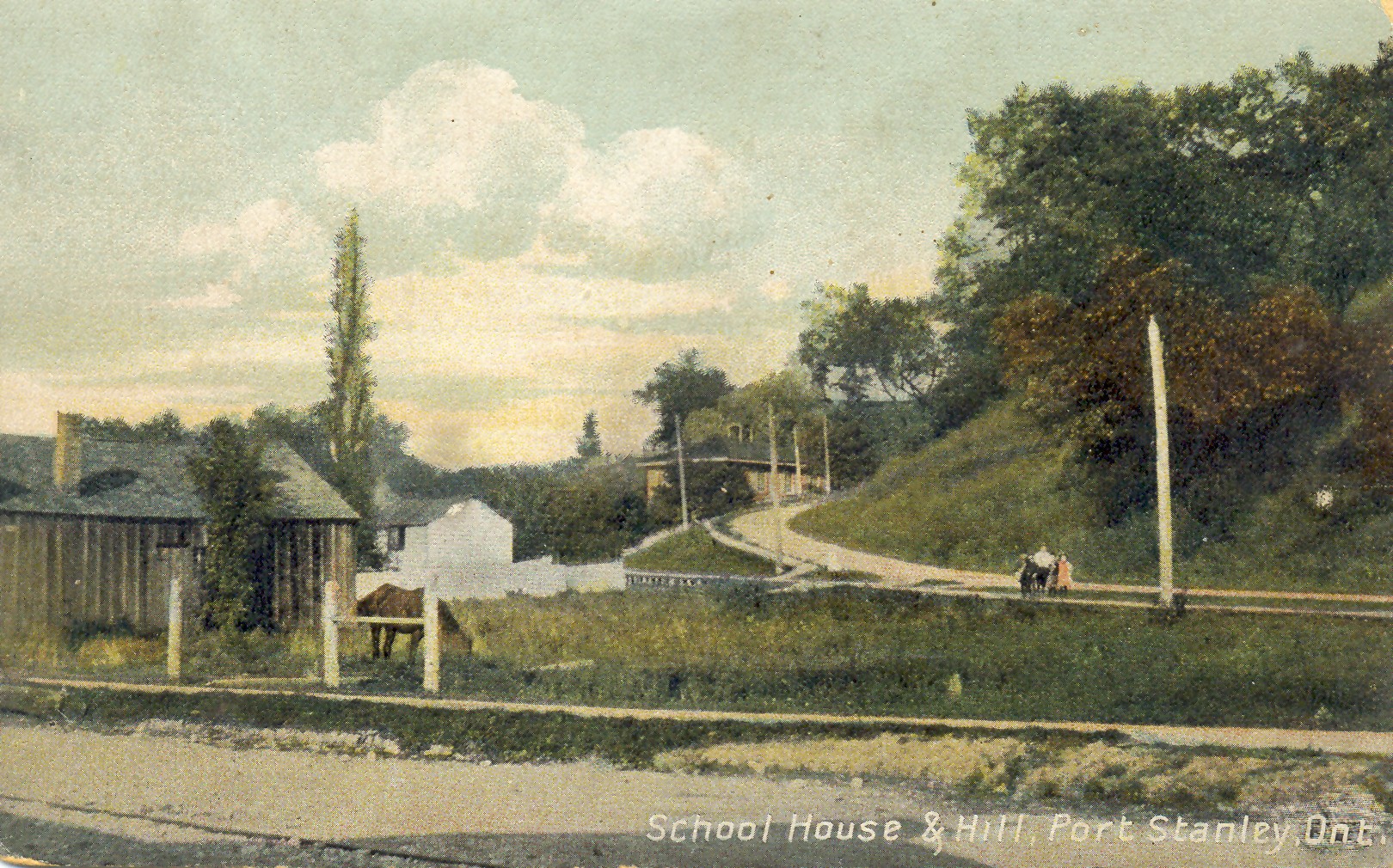
An early glimpse of Joseph Street Hill, capturing the intersection before 1911 and the arrival of the Stirling Bank building.
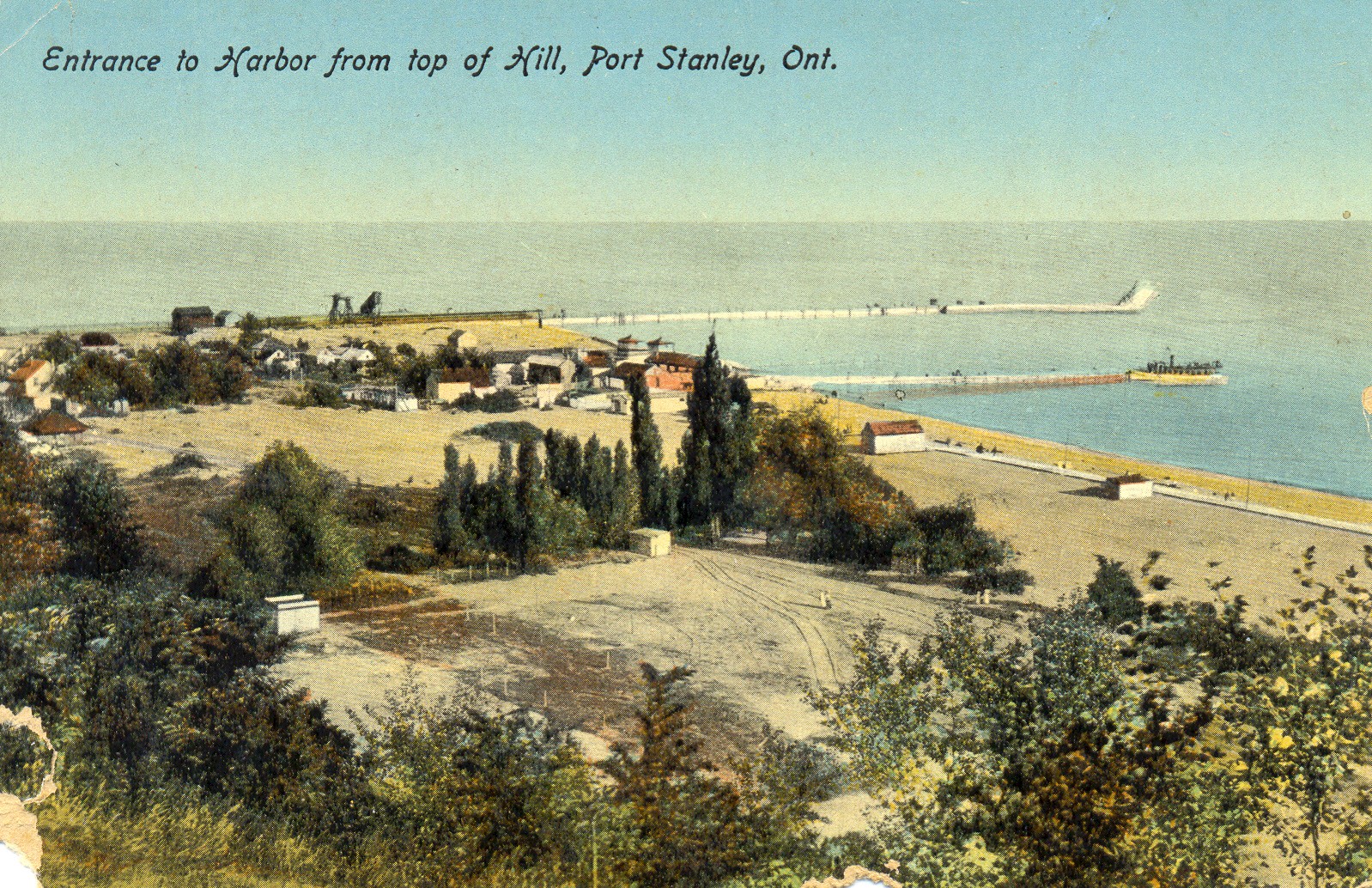
The Stanley Beach Casino’s twin turrets rise above Port Stanley’s original boardwalk and historic 1906 pier, capturing a glimpse of the village’s early charm.
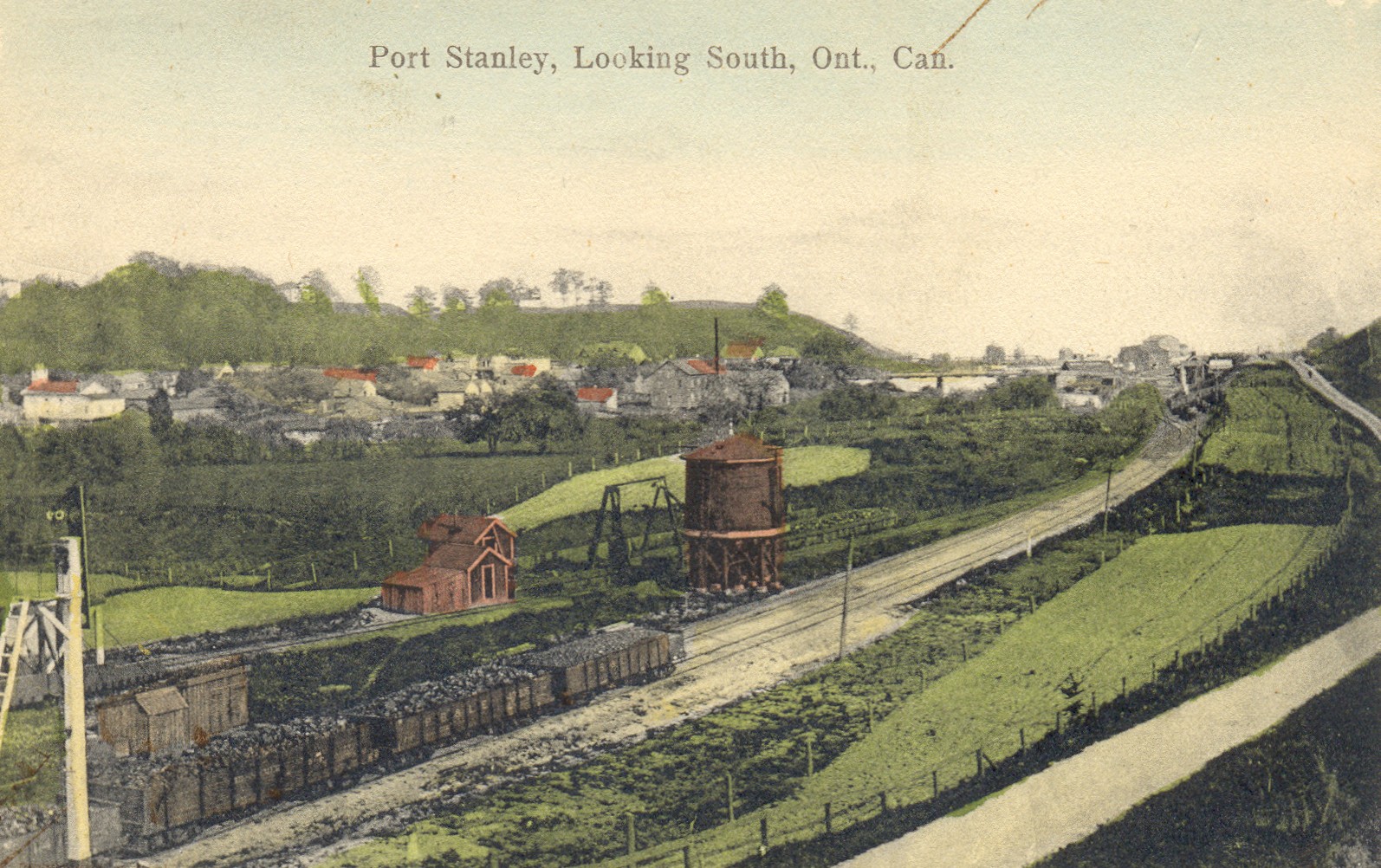
This early railway scene, dated before 1915 by its lack of electrification, shows a hand-colored view with vivid red and green highlights.
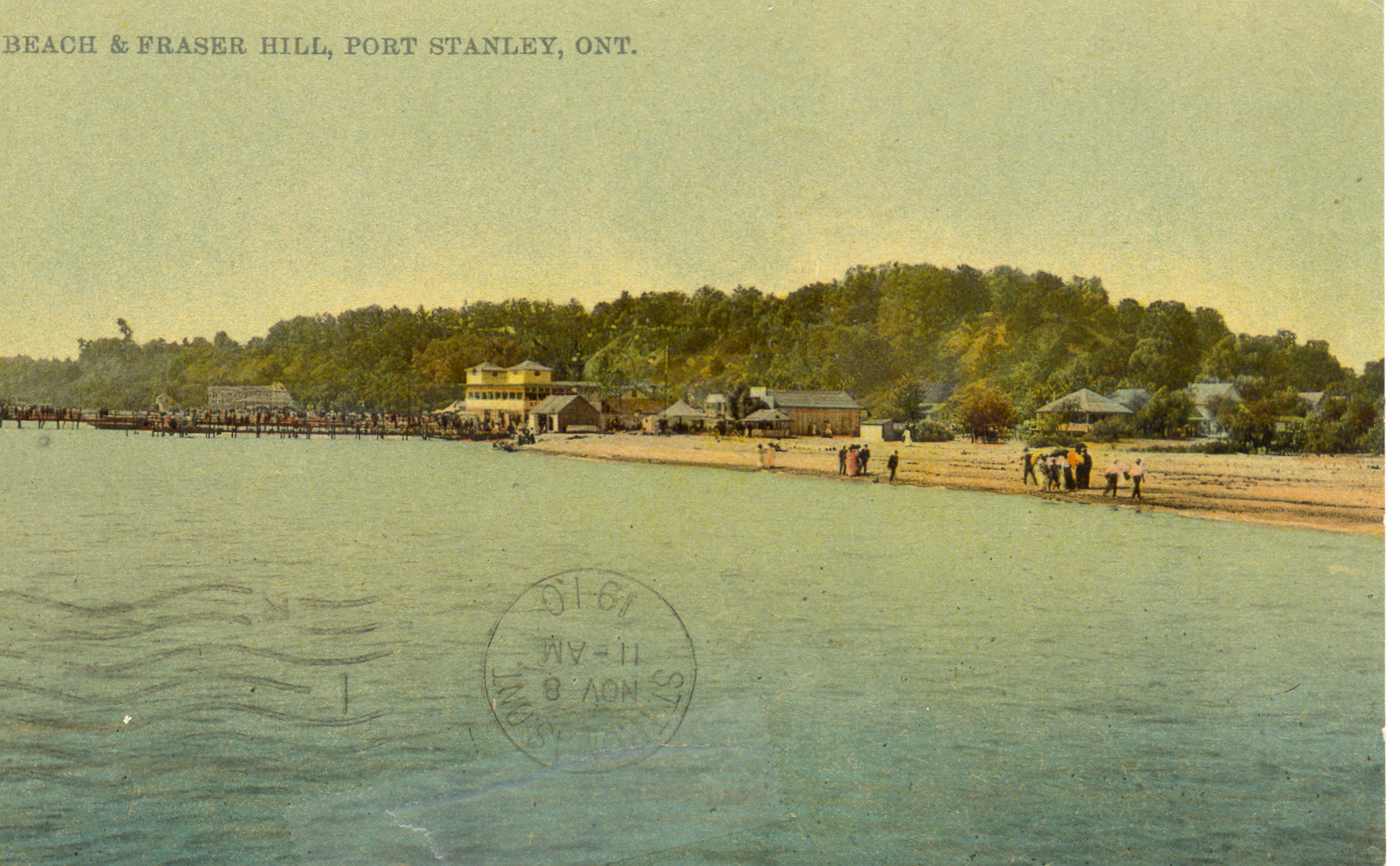
Though the lens stretched the distance, the twin turrets of the Stanley Beach Casino stood just south of Kettle Creek’s mouth, anchoring the shoreline in 1910.
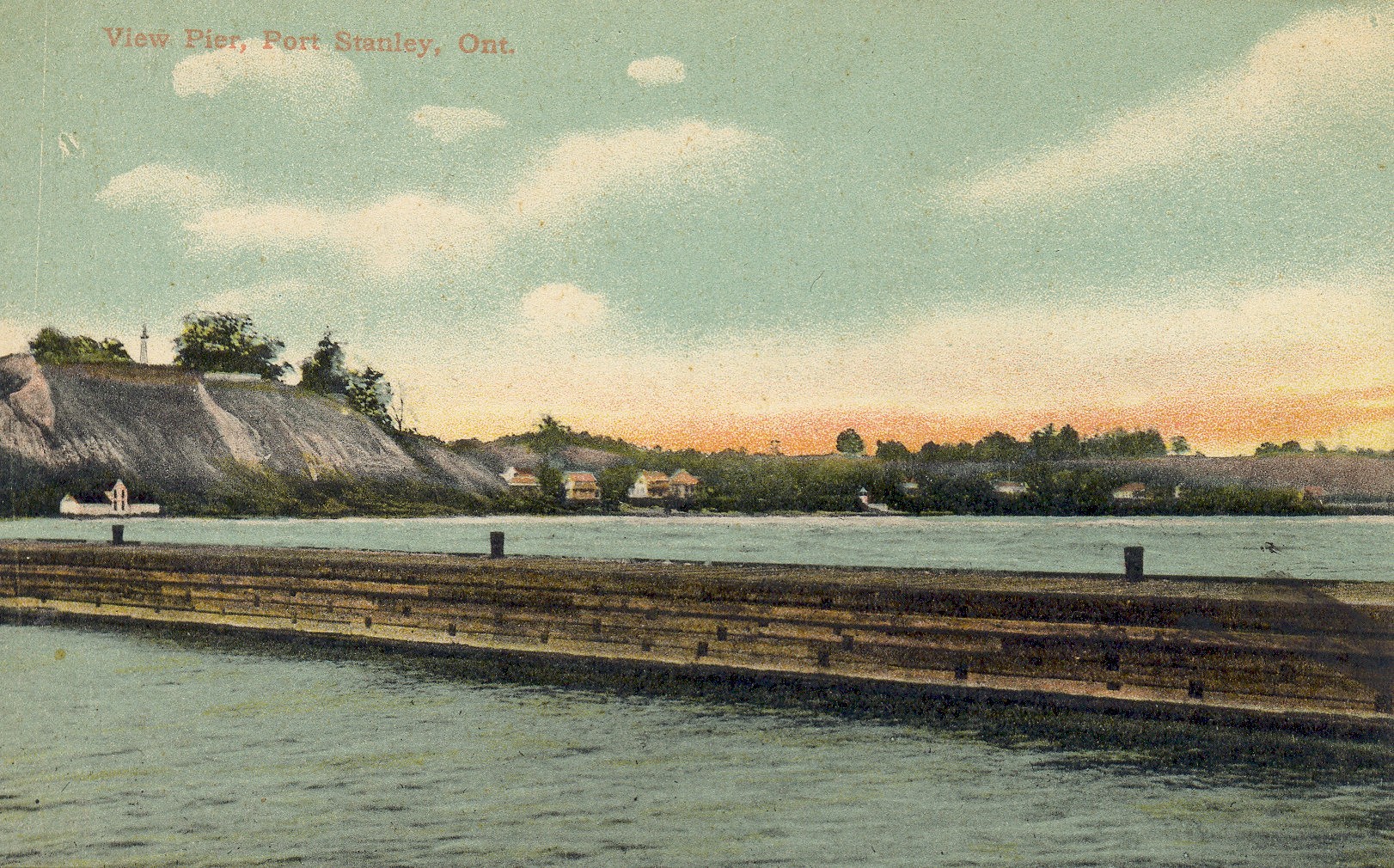
An early view of Hillcrest and Orchard Beach, where families like the Smiths and Nashs once summered and a mystery building still invites curiosity.
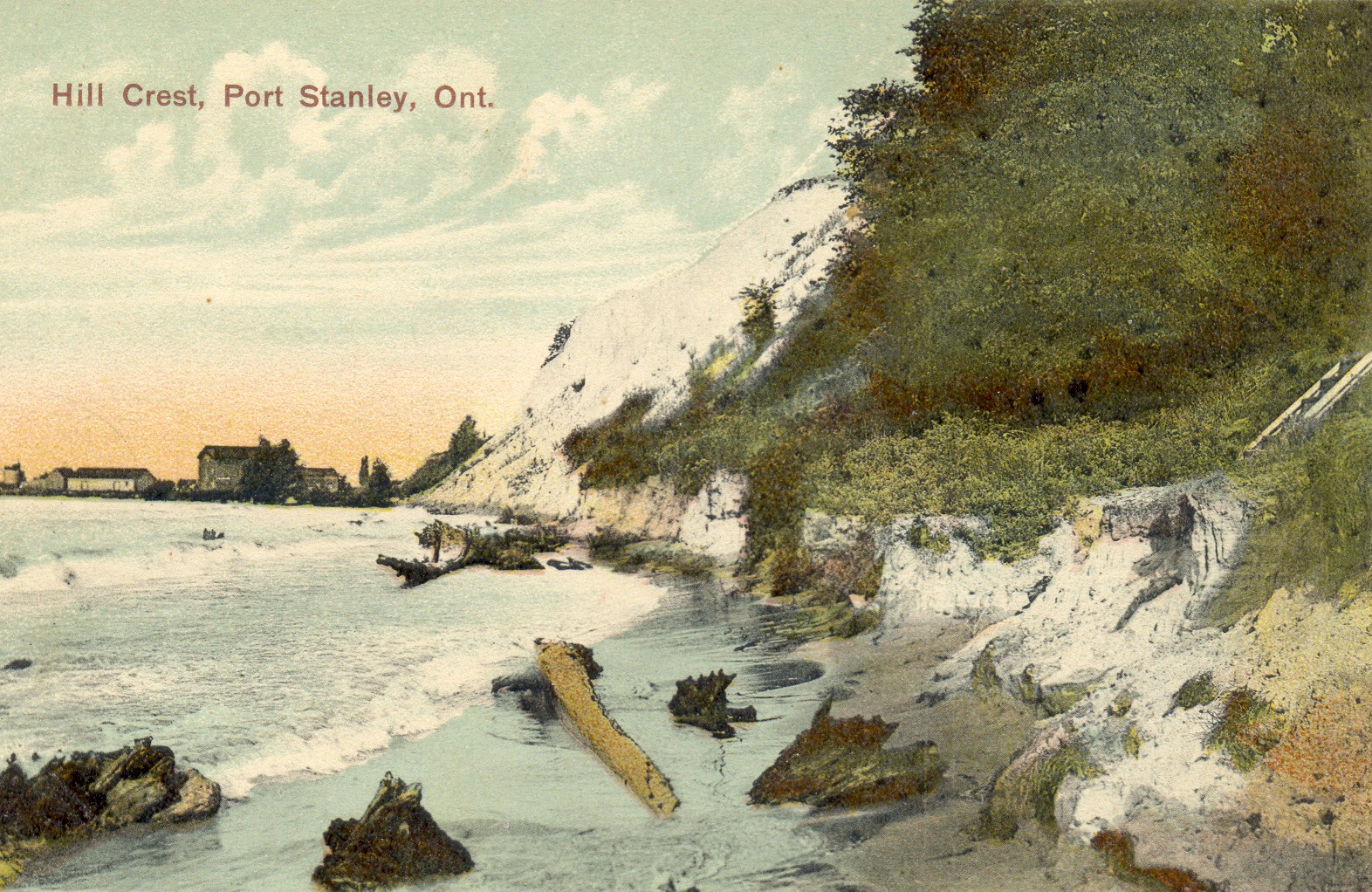
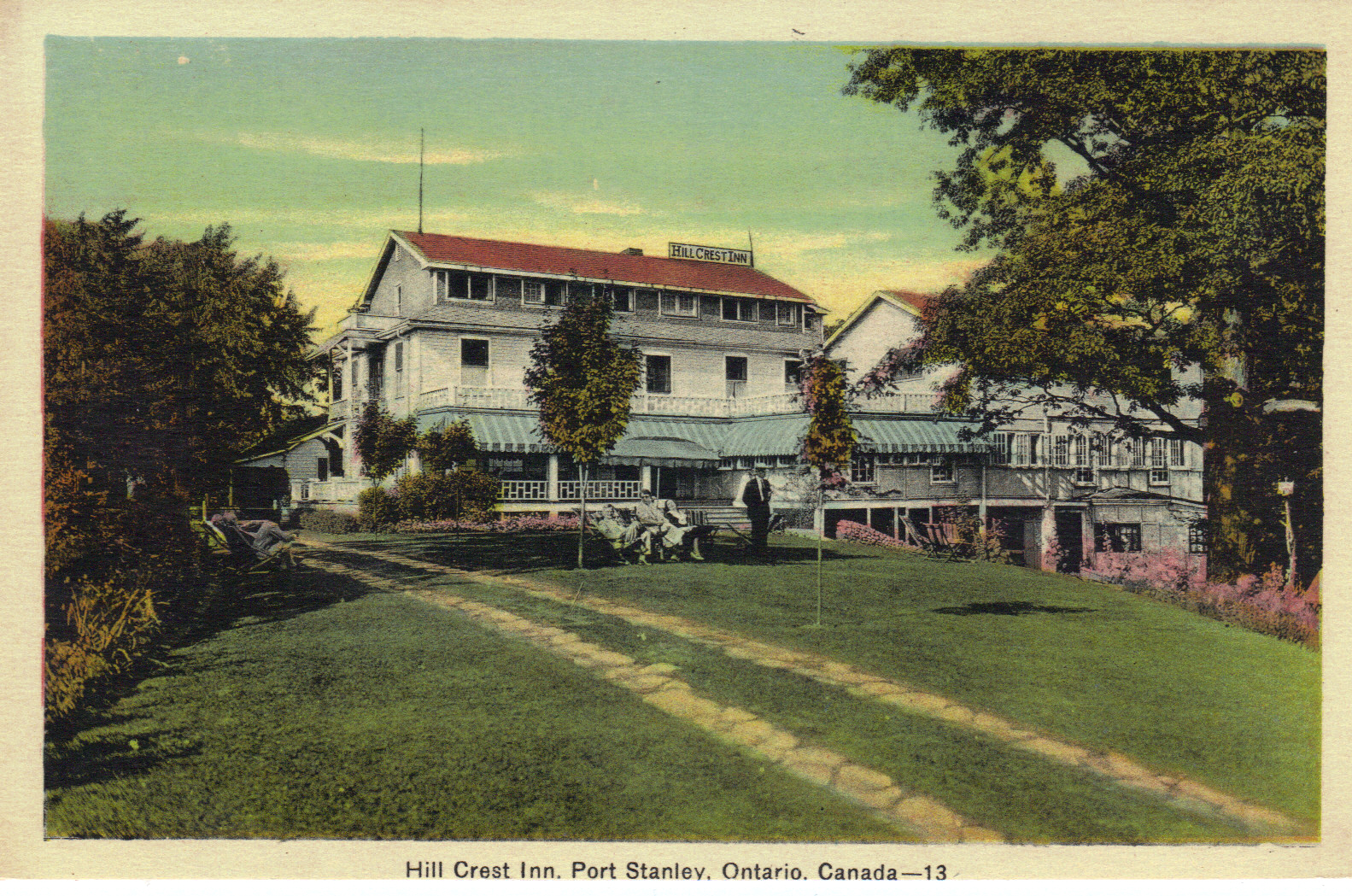
Hill Crest, now called Little Beach, offers a glimpse of Port Stanley’s shoreline likely captured around the 1940s.
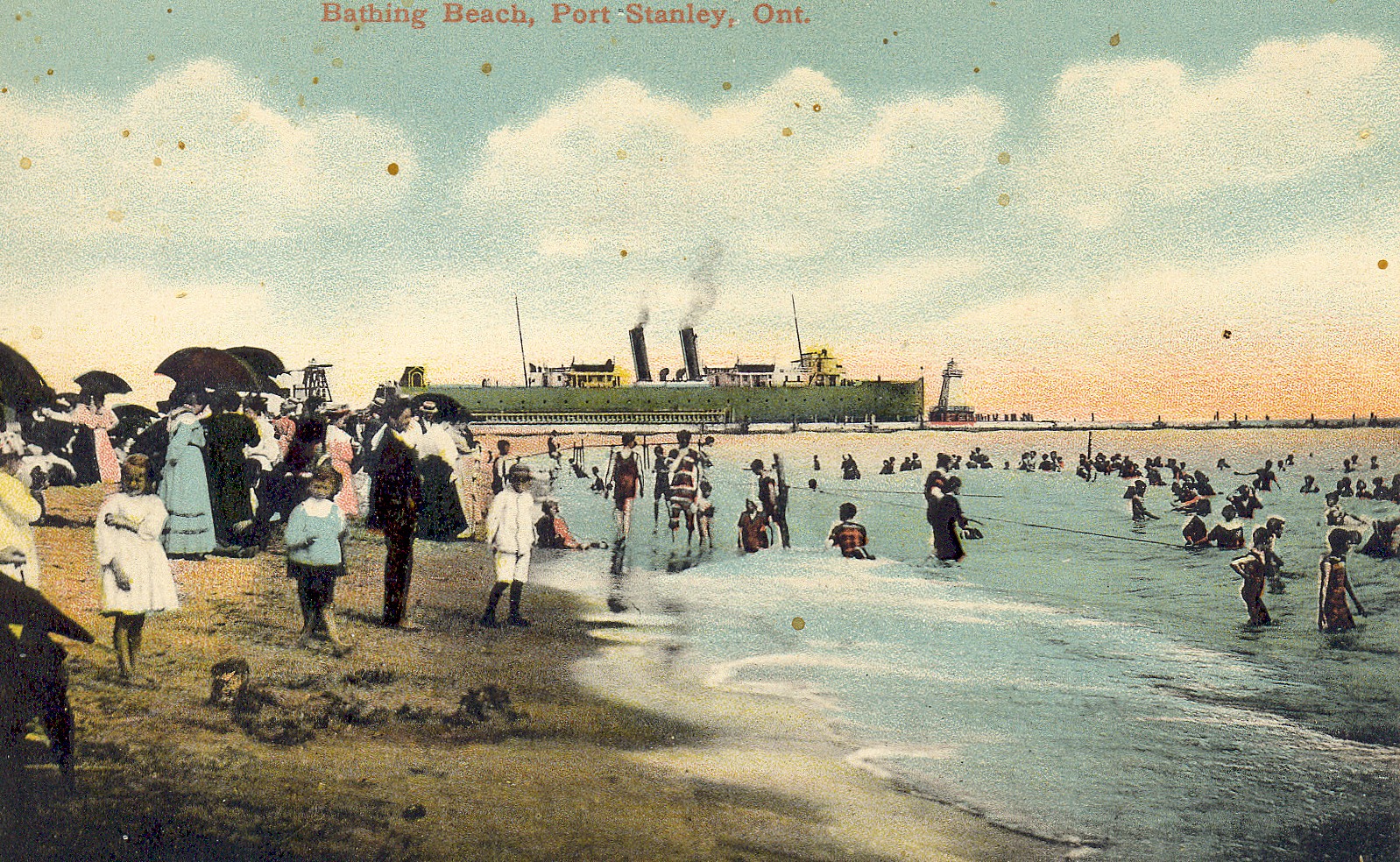
The 1908 Port Stanley Bathing Beach features an earlier lighthouse design, distinct from the one that stands today at the pier’s end
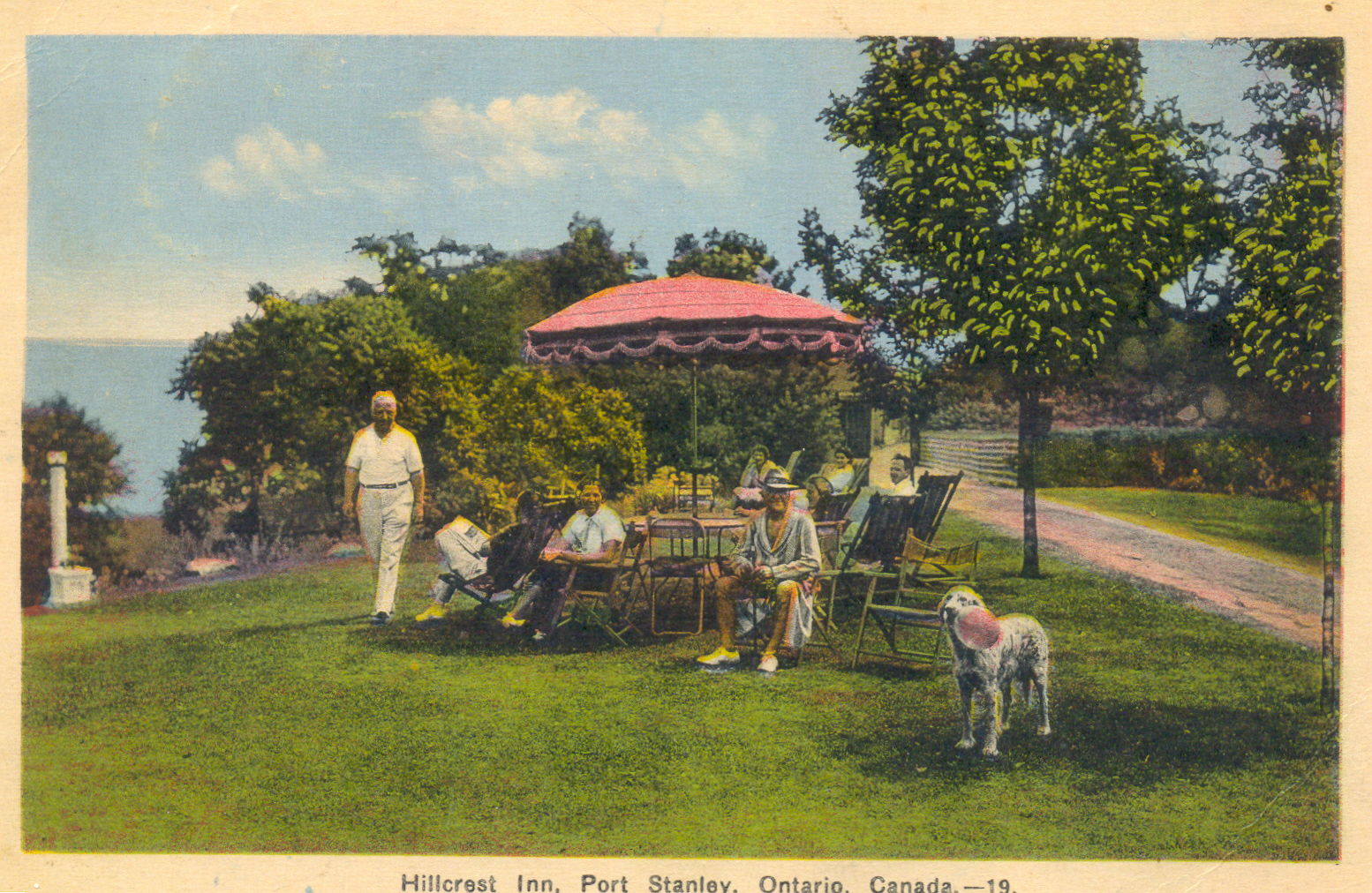
The Hillcrest Inn garden, a beloved 1930s-40s Port Stanley spot, was famously guarded by the Shipps’ playful Dalmatians who loved carrying balloons.
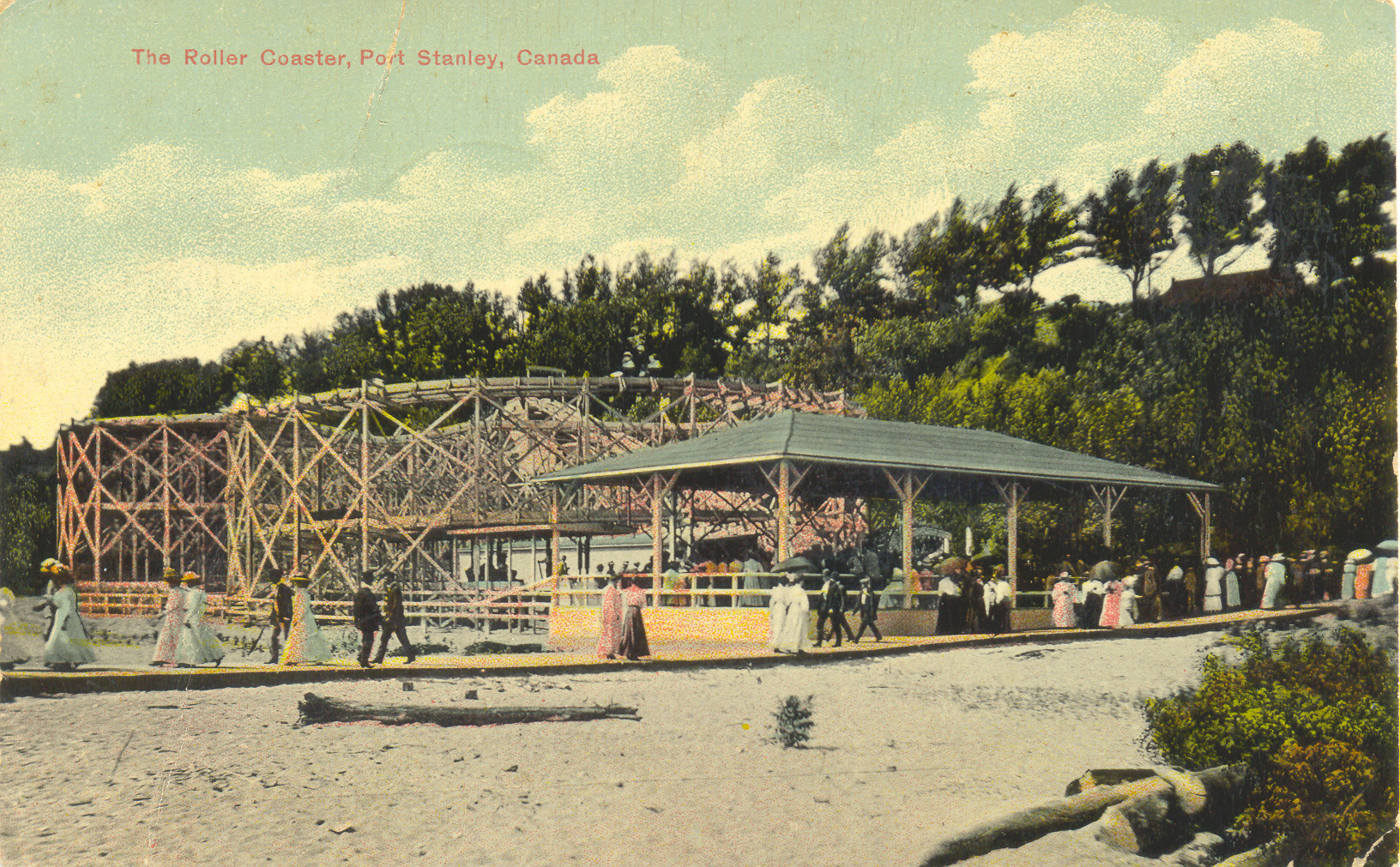
Port Stanley’s roller coaster, remembered as both red and green, hints at the colorful memories and mysteries of its past.
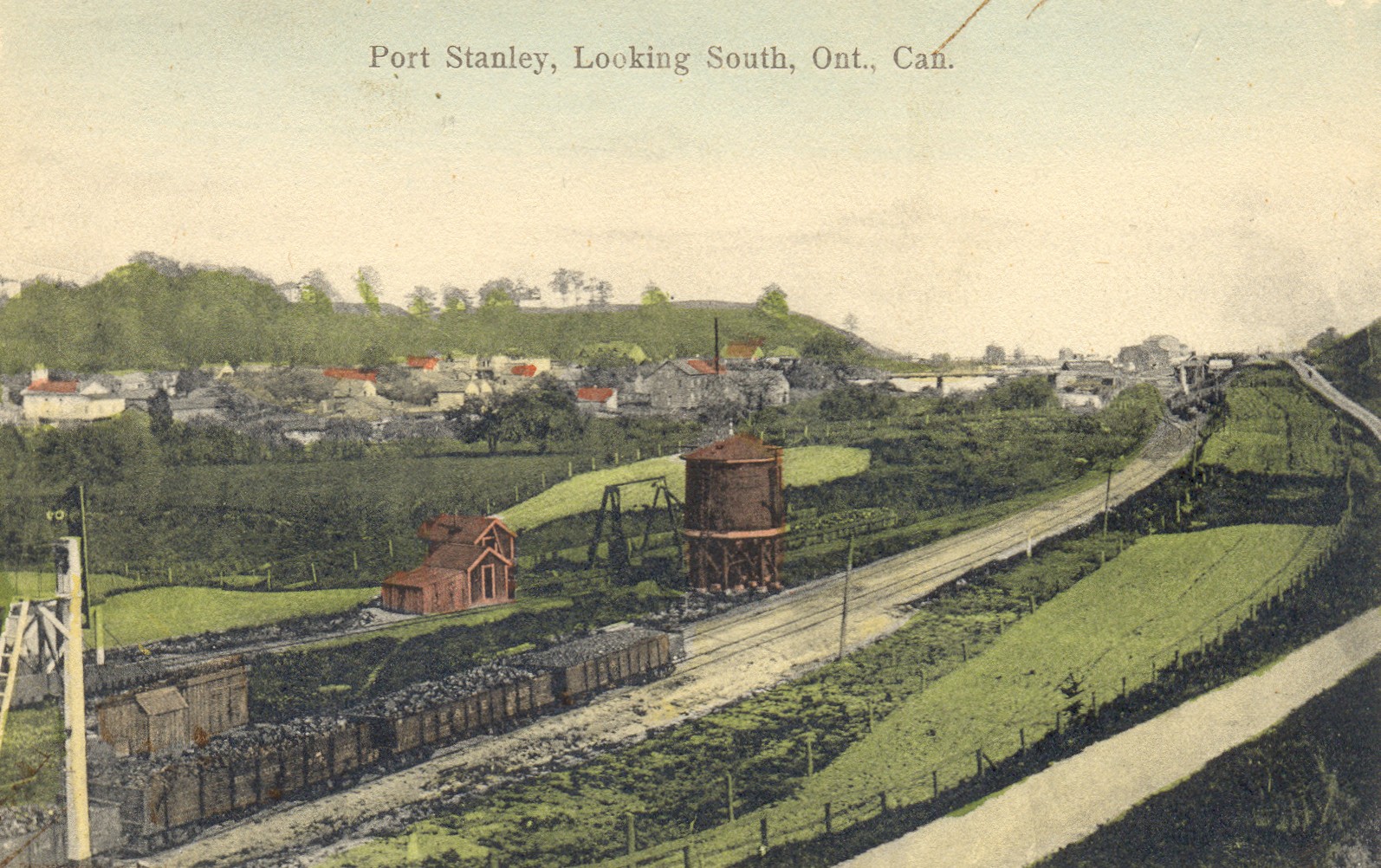
Looking south over Port Stanley before 1915, this hand-colored view, touched with red and green captures the village before railway electrification.
This 1912 view of Hillcrest captures a mysterious cottage east of the village that some wonder might have become the Kettle Creek Inn.
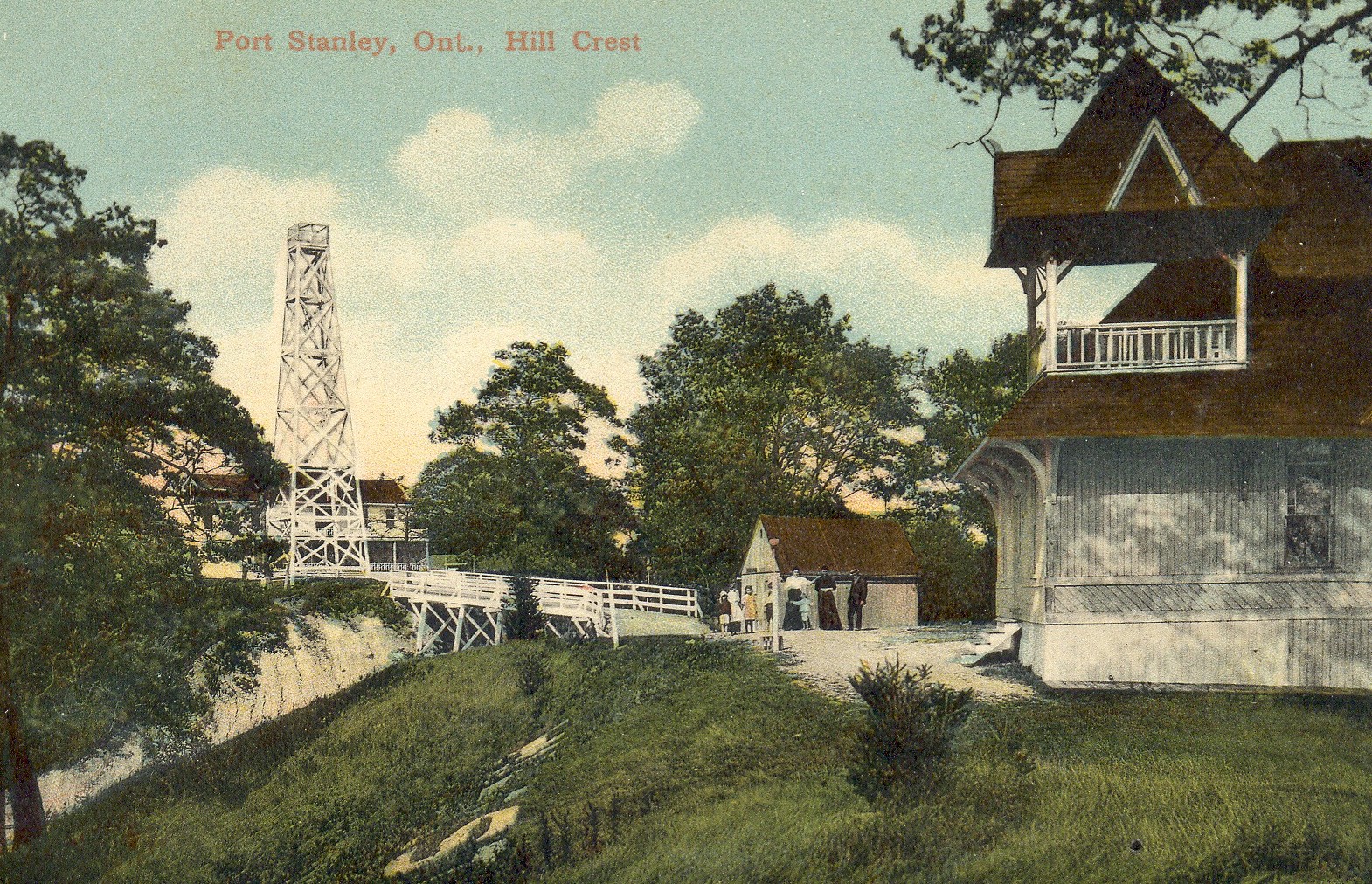
Overlooking the village from Hillcrest, the Liberty Hill Club once welcomed summer visitors with cottage lots, a grand dining hall, and family rooms run by a first-class steward.
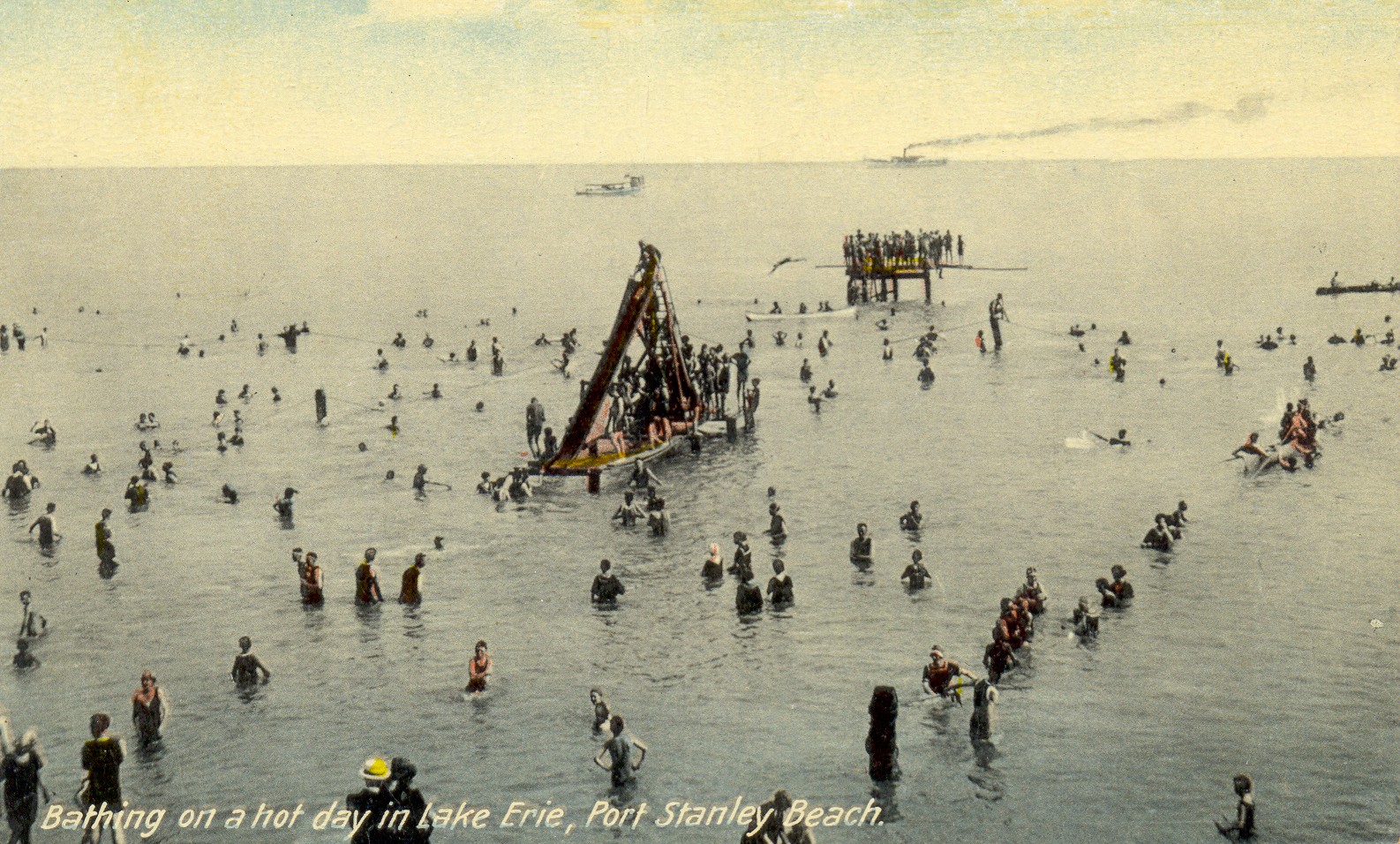
A charming lakeside scene with a boat-top water slide and offshore diving platform, likely from the era of rented wool bathing suits and summer fun.
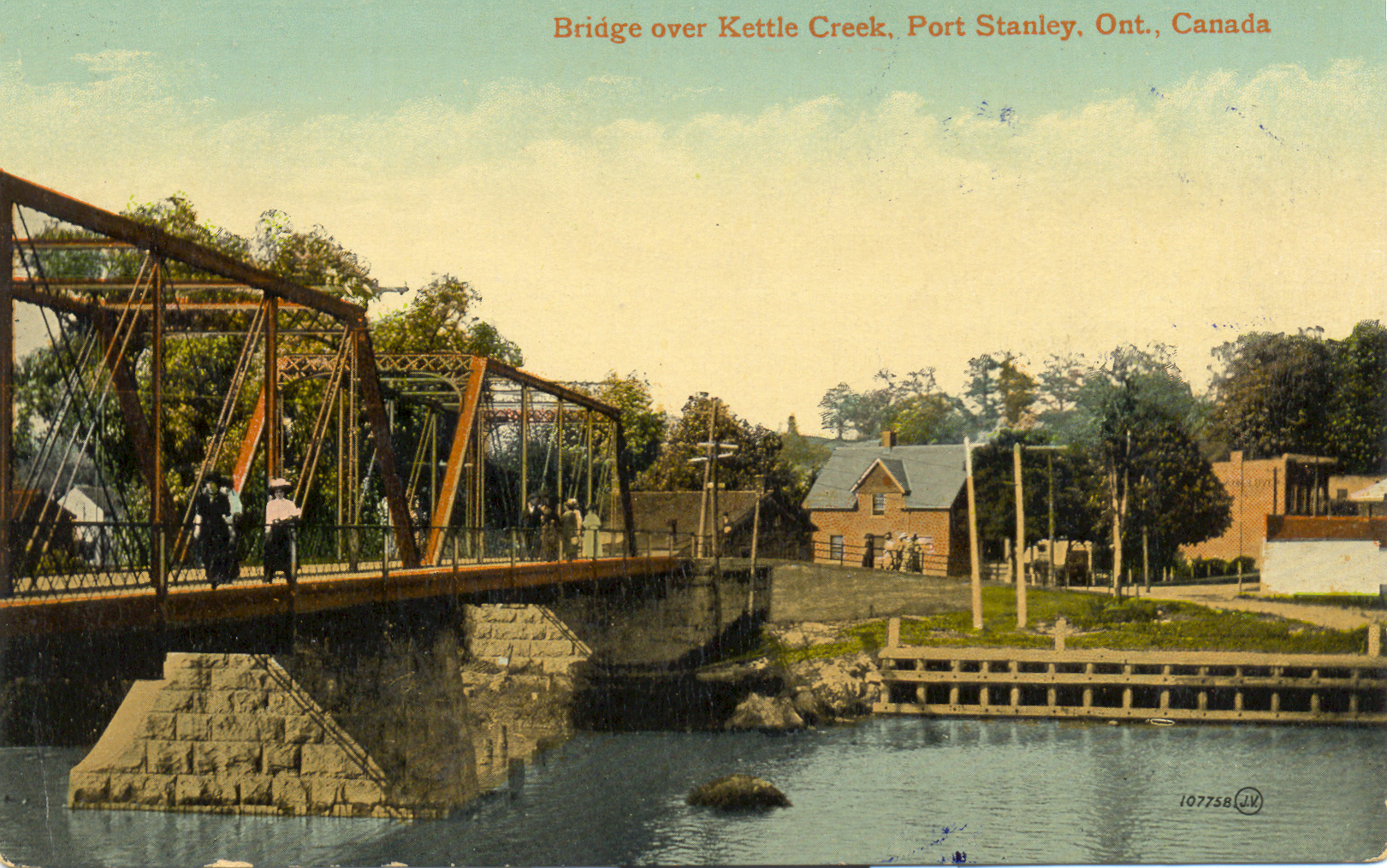
Long dresses and early streets frame this pre-WWI view, with buildings still standing at Bridge and Bostwick named for Port Stanley’s founding father, John Bostwick.
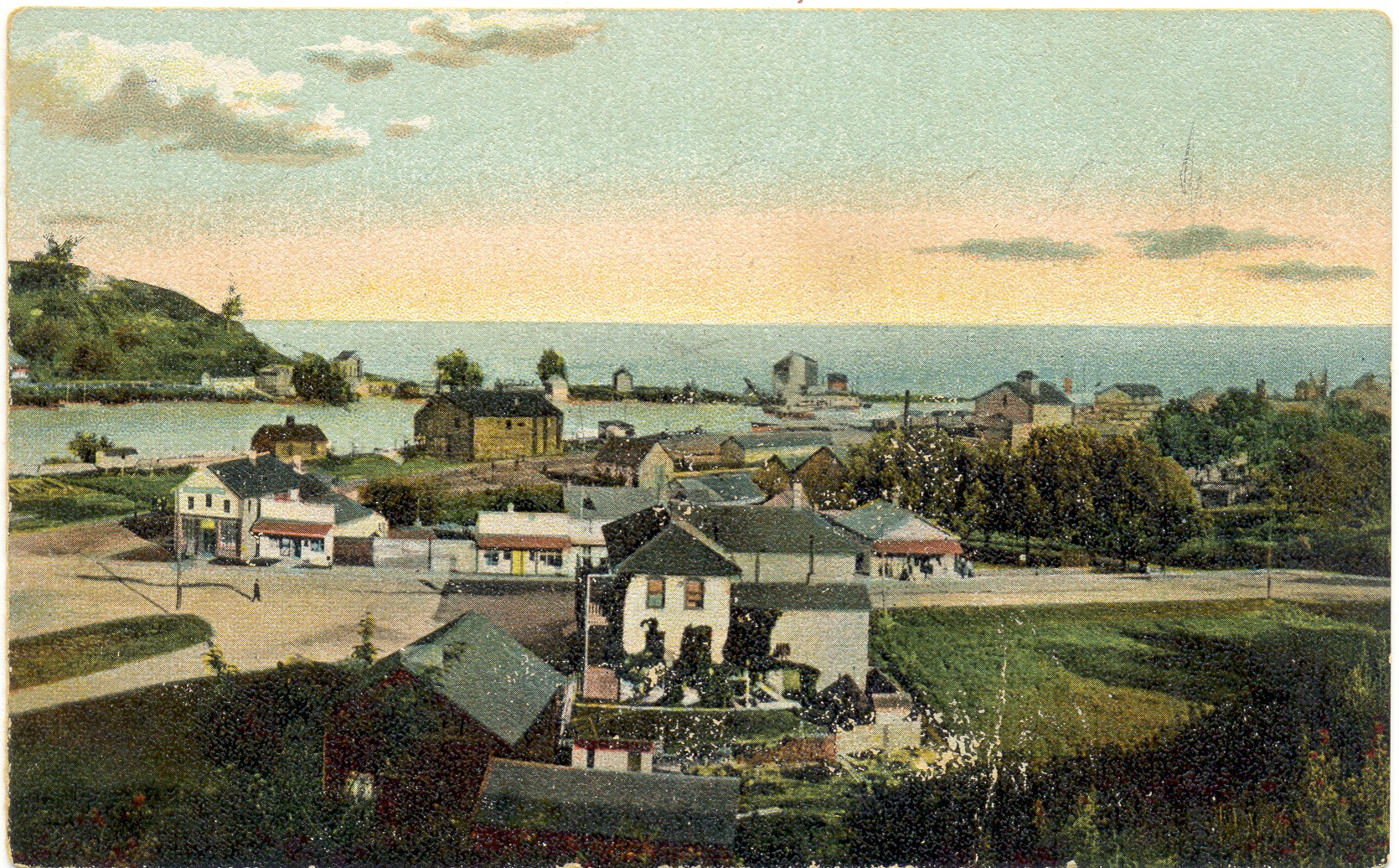
An early view of Port Stanley harbour before the grain elevator stood, where liquor was shipped during dry days, fish became fertilizer, and brooms were built by the bay.
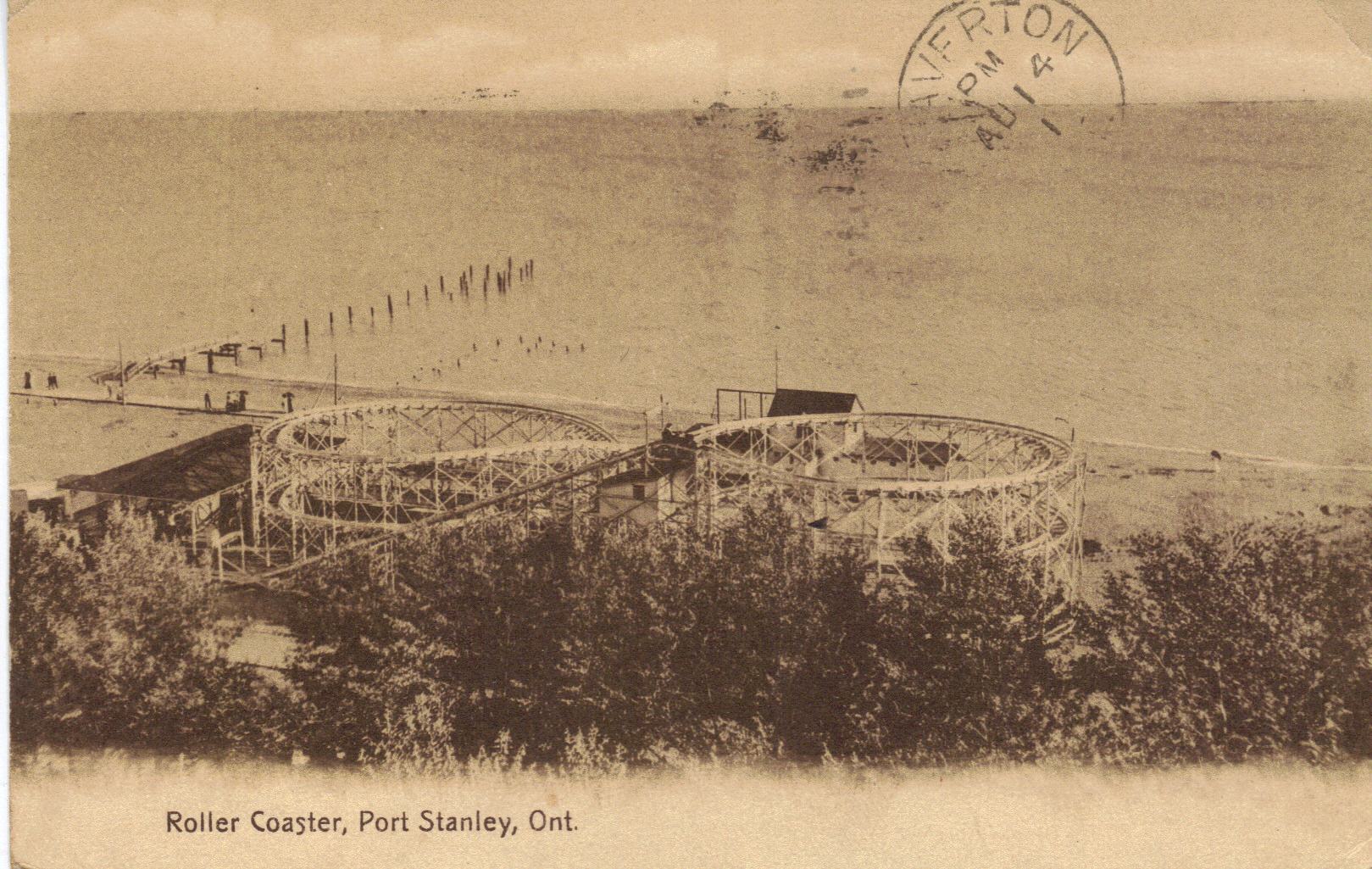
Seen from the bluff, Port Stanley’s figure-eight roller coaster once marked the shoreline so prominently it appeared on a 1909 harbour chart before fire claimed it in 1935.
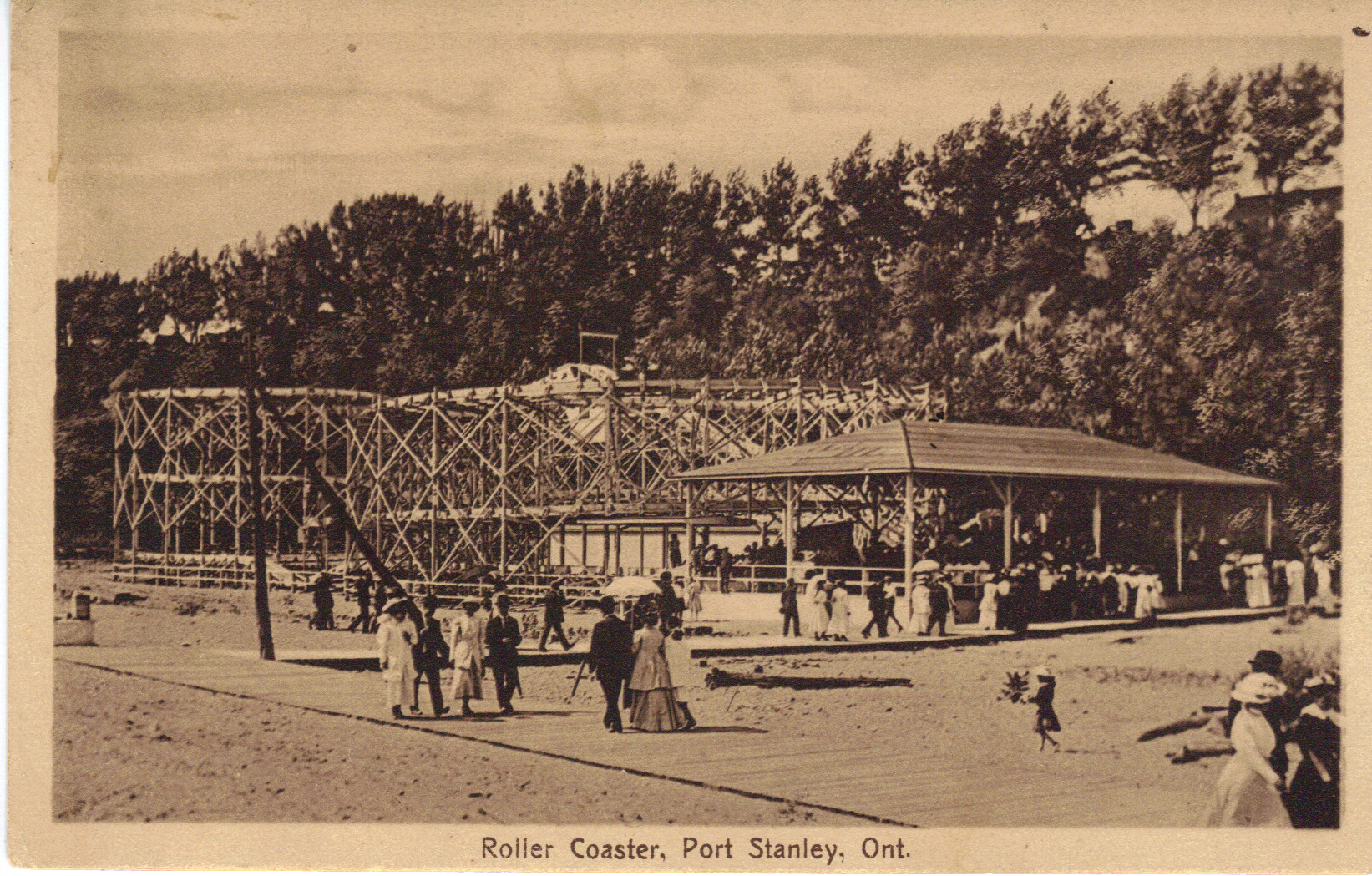
Memories differ on the color of Port Stanley’s roller coaster, green to some, red to others, perhaps repainted over time, or simply tinted by early photo coloring.